
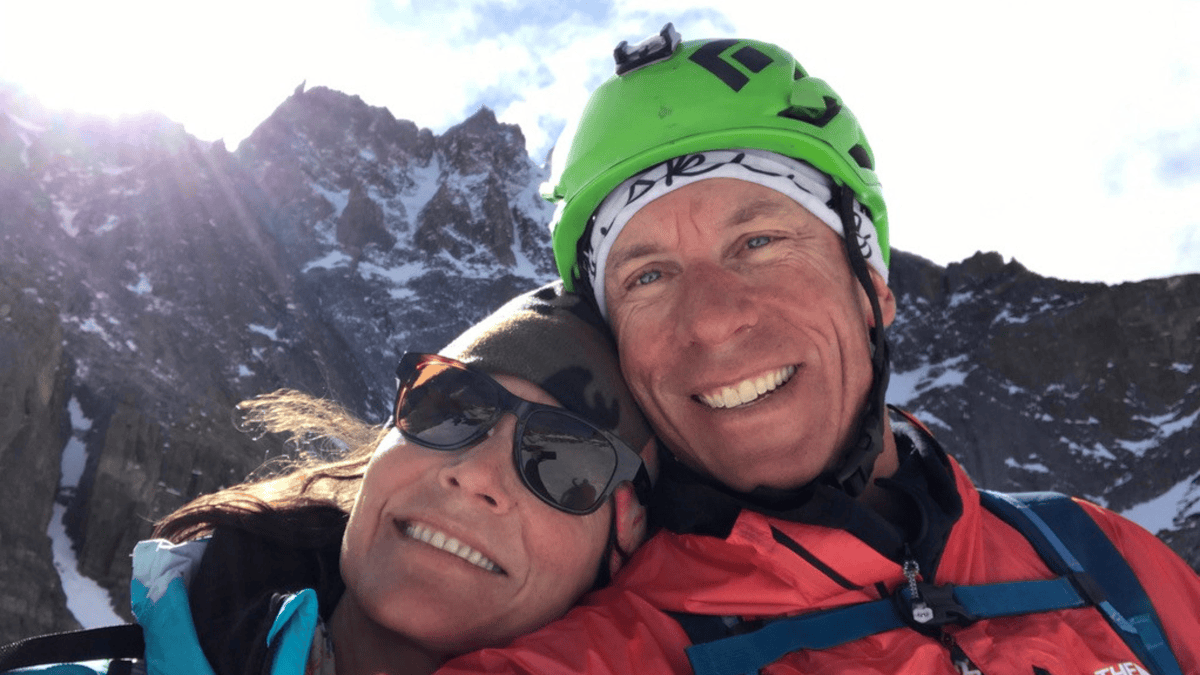
American author and poet Charles Bukowski once wrote, “Find what you love and let it kill you.” His sentiment certainly applies to mountain climbers, a passion that claims a sizable number in the end. At one point in Everest: The Other Side, the wife of a climber asks her husband how many people who’ve been to their home have died climbing. Their tally grows to more than half a dozen and the husband’s mood becomes somber. If you knew that many who died golfing, bowling, fishing or whatever, it would be extraordinary. Unfortunately for climbers, it’s a sad fact of life.
Which is why I’m glad that my passions–writing and movies–aren’t perilous. Occasionally I’ll get writer’s block, which is frustrating. Or I’ll force myself to get through a movie I hate like Alex Garland’s Men, a tortuous experience that isn’t fatal. My point is that I’m glad I wasn’t born with whatever drove climbers like Jim Morrison and Hilaree Nelson. I don’t need to climb up the face of a mountain in the bitter cold in order to feel alive. A good movie and being able to tell people about it afterwards is enough for me.
Everest: The Other Side is the latest film I’ve seen about Everest climbers. The first was the TV movie from 1997, Into Thin Air: Death on Everest. Then 1998’s Everest documentary, which was filmed with IMAX cameras. Next was the 2015 Everest movie, which had an impressive cast that included Jason Clarke, Josh Brolin, Jake Gyllenhaal and Kiera Knightley, among others. All of those provided different views on the 1996 tragedy where eight climbers died summiting the peak. That people continued to do so afterwards says a lot about the passion of climbers.
What struck me immediately in this movie is how ordinary Morrison and Nelson are when they’re not training or climbing. The married couple share a nice home in Colorado with her two boys. They’re good parents who dote on their kids, making sure they eat breakfast before driving them to school. The family home is clean. If it weren’t for their profession, mom and dad would easily pass for typically boring suburbanites.
When confronted with the obvious question of “why do you do this”, both respond the same way as other climbers. The act makes them feel alive. One of the two (I can’t remember which) says that when they’re at the summit of whatever they’ve climbed and take in the view, there’s no experience like it. Well, yes. They’re full of adrenaline at that point, having basically cheated death to get that view. Anyone would feel superhuman over that accomplishment.
Documentaries like these always turn me into an armchair psychiatrist. Perhaps climbing fills a hole in their lives. It so happens that both Morrison and Nelson’s pasts both have life-changing events. Morrison’s first wife was a recreational pilot who crashed while flying with their two sons. Nelson’s backstory isn’t quite as terrible, though. She divorced her first husband when she brought the family along on a climb. Morrison and Nelson actually met there, when she had settled on getting a divorce. If that wasn’t kismet, I don’t know what is.
As a married couple, the two are visibly happy to be climbing partners. Nelson’s boys, however, didn’t inherit the climbing gene and are wary of their parent’s lifestyle. When the family undertakes a relatively easy climb as a bonding experience, the youngest initially refuses to continue. He’s exhausted and scared, but eventually he finishes the journey with some polite prodding. Afterwards, he says he hated it but was glad he did it. I’m guessing that’s the last time he climbed anything.
The original gist of Everest: The Other Side was to capture Morrison and Nelson climbing the North Face of Everest and skiing back down, a feat nobody had yet accomplished because of how dangerous it is to climb up the north face. The two meet with Thomas Hornbein, one of the few to do so for advice. (The most difficult pass on the north face is named “Hornbein Couloir” in his honor.) He completed his climb in 1963, so he’s an old man now. He appreciates the attention, but the look on his face while recounting his ascent implies that he still feels lucky to have survived. He doesn’t bother to tell Morrison and Nelson not to do what he did, because he knows that once a climber has a goal, only injury or death will prevent them from doing it.
Spoilers ahead.
As part of their training for Everest, the two ascend Manaslu (a.k.a. Kutang, the eighth highest mountain in the world) in Nepal. Morrison is the first to ski down, then Nelson follows. After a few strides, the sheet of snow under her gives away and she rapidly slides off screen. I thought Nelson survived being swept away at first, because no movie would intentionally show a person’s final moments. In this case, Nelson plummeted downward and likely died from injuries or suffocation. When Morrison finds her red jacket two days later, I could have sworn he mentioned suicide. In any event, Morrison and the Sherpas take Nelson’s body down the mountain for a memorial ceremony in her honor.
End of spoilers.
The shocking tragedy that strikes Morrison and Nelson occurs about thirty minutes into the movie. The remainder follows Morrison’s quest to honor his wife’s memory by completing the climb that she never got the chance to do. While I understood his logic, I questioned the selfishness of it given that he’s now the sole parent of Nelson’s sons. The possibility of them having to deal with the death of their stepfather so soon felt wrong. But Morrison has his mind set upon doing it, regardless of the cost to him or his family.
Which brings me back to the scene I mentioned at the outset. The co-director of the film, Jimmy Chin, decides to help Morrison complete his quixotic journey by taking over for Nelson as his climbing partner. Elizabeth Chai Vasarhelyi, his wife and this film’s co-director, reminds him of their friends who died during climbs. It should come as no surprise that she divorces him during this production.
I don’t know if it’s a spoiler to say that Morrison does succeed in doing the impossible. I doubt anyone would want to see a documentary featuring two young men attending the funerals of both their parents. Then again, I’ve seen the same 1996 catastrophe several times, meaning that I’m highly susceptible to morbid curiosity. While I’m glad that Morrison was able to honor his wife by doing what nobody had ever done before, I was relieved that he didn’t force his sons to grieve his death as well.
Much of what Everest: The Other Side depicts will be familiar to Everest junkies, specifically the incredible photography and shots of climbers gasping for breath while pulling themselves along via ropes. What is different about this film is that it doesn’t shy away from the immense physical–and sometimes fatal–toll paid by professional climbers and Sherpas. In the end, this documentary shows how nothing cures a climber of their obsessions, not even the death of a loved one. While I’ll never understand what drives people to climb Everest, let alone ski down it, I appreciated being able to witness the madness safely from my movie theater seat. Recommended.
Analysis
Sherpa’s coming to the fore
One thing that I noticed about mountain climbing stories was how the Sherpas were largely an afterthought. However, the recent release of Apple’s Tenzing and this documentary signal a shift in the framing of these narratives, in how they both acknowledge the hard work and courage of the Sherpas. This has been long overdue.
Everest: The Other Side gives the spotlight over to lead Sherpa Yukta, who says that his job is the only way he can provide for his family. When he’s hit by an avalanche and breaks his leg, it’s a disastrous turn of events. The movie doesn’t explain how his family got by while he recovered. When it’s revealed a year later that he’s leading Morrison’s Sherpa team, it’s a bittersweet moment because he has no choice but to continue doing a job that could kill him.
This broadening of the story’s focus beyond the climbers means that it’s impossible to view Morrison’s triumph as anything but the result of a team effort. He was heavily indebted to Sherpas like Yukta who toiled thanklessly behind the scenes to make their dreams possible. The disparity between the hired help and the glory seekers they work for has never been clearer.
IMAX
One storyline that fascinated me about the 1998 Everest documentary is how the cameramen had to lug the huge and heavy IMAX cameras up the mountain and set them up to capture the incredible shots we get to see. Everest: The Other Side does the same, but I also noticed that a fair amount of the footage was shot with drones. I wonder if having that technology to lean on made things a bit safer for the camera crew.
A little respect
Outside of a photo, the movie never shows Nelson’s first husband. I was grateful that the movie never tried to paint him as the bad guy. In fact, it mentions that he takes care of his sons for over a year while Morrison is away trying to honor his ex-wife. Hearing his point of view as an outsider would have been interesting.
The money angle
Since the movie doesn’t mention that Morrison and Nelson have “normal jobs”, I assumed that they earned a living through promotional endorsements. They wear something with The North Face logo on it in almost every scene. The two appeared to live comfortably, if not extravagantly. I wonder how much a professional mountain climber makes? And are they able to get life insurance?

