
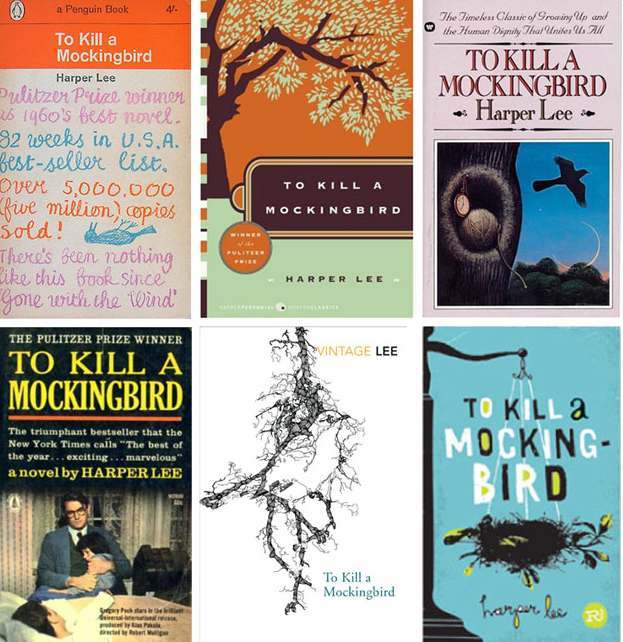
My journey with Harper Lee’s To Kill a Mockingbird didn’t begin in high school, where students typically become acquainted with it. Instead, it began with an article published in the Washington Post on November 3, 2023, titled “Teachers tried to dump ‘To Kill a Mockingbird.’ The blowback was fierce.” As someone who typically reads classic literature, I was curious why anyone would want to take Mockingbird out of the required curriculum. The novel, first published in 1960, has been considered as one of the great works of English literature since it was published. Why would educators want to pretend it no longer exists?
The article described how students found the book dated and offensive. I came away with some assumptions regarding the opinions of the teachers and students who were quoted. First, any work published sixty-five years ago, set thirty years prior, will come off as outdated to today’s readers. This was a world before most conveniences that today’s kids take for granted existed. Television, for example. And computers and the internet. Students today probably feel the same way about Shakespeare’s plays, Nathaniel Hawthorne’s The Scarlet Letter, Charlotte Brontë’s Jane Eyre and so on.
As for the novel being offensive, I had no opinion because I’d never read the novel. Why it wasn’t included in my school’s English curriculum remains a mystery to me. However, I knew what it was about in a very general way. A lawyer named Atticus Finch defended an African American on trial, and that the story was told through the eyes of his young daughter named Scout. I knew that Atticus was played by Gregory Peck in the movie adaptation, and that he won an Academy Award for his performance. And that was it. Until I finished the book, I didn’t even know the outcome of the trial.
With admittedly very little information, I assumed that the students were taking offense to how white authors from the South often depicted African Americans. When I read Mark Twain’s Huckleberry Finn years ago as part of a college course, my professor noted that Finn’s treatment of the slave Jim was racist. However, the disclaimer used when discussing this and similar works was that they reflect the time when they were written. Better to read Twain’s book with caveats than not reading him at all, I thought. Of course, it’s far easier for a white person like me to accept what happens in a book like Huckleberry Finn than someone who isn’t.
Regarding To Kill a Mockingbird, I was concerned about the willingness of educators to remove it from their school’s curriculum. Was this action being taken in the name of (gasp!) unrestrained wokeness? I believe that having an opinion requires more than cursory knowledge of the subject at hand. In this case, I hadn’t read the book, so I couldn’t take either side of the argument in good conscience. (Crazy, I know.)
With this in mind, I figured it was time for me to finally read the book. I don’t have as much time as I’d like, and I completed the book over the course of fourteen months. Now that I’ve read it, I understand what the progressive teachers were complaining about. For my part, I think the book should still be required reading, for the reasons why people hate it and also love it.
First, the bad news
To Kill a Mockingbird is permeated with racism. Stating it any other way would be lying. The story’s racism isn’t present much initially. For example, Scout states that her grandfather owned slaves. This would be very likely for anyone with descendants who fought on the side of the Confederacy during the Civil War. Lee uses this casual admission to lay the groundwork for her exploration of the racist attitudes that were omnipresent in Scout’s life.
Calpurnia, the family’s housekeeper and caregiver, is viewed almost exclusively as hired help. It wouldn’t be a stretch to describe her work as being exactly the same that a slave would have done before the Civil War. When Atticus states that she’s more educated than most colored folks, it sounds like a back-handed compliment. Scout makes a point of describing how Calpurnia’s dialect changes when she’s angry, indicating that Calpurnia makes an effort to sound white while she’s at Scout’s home.
Aside from Calpurnia, Scout doesn’t interact with any Black people. Her classroom consists entirely of other white children. The one time she sits among Black people is during the trial, which she did only because she didn’t want her father to know she was in the courtroom. Otherwise, Scout’s life reflects segregation. In her world, white people and Black people rarely interacted outside of work and trade. Even when Boo Radley was arrested, the sheriff locked him up in the courthouse basement instead of putting him in jail with Negroes.
The n-word first appears in chapter 4, when Scout is ostensibly quoting Calpurnia. Chapter 6 uses the n-word to depict the difference in how enlightened and less-enlightened white people consider African Americans. Miss Maudie, who Scout adores, says Negro, while Miss Stephanie, who Scout dislikes, freely says the n-word during the same conversation.
Scout freely uses the n-word for several chapters until Atticus advises her not to. However, instead of telling her that her using the n-word is offensive to Black people, he derides its use as common. I can understand if African Americans reading the book today had a tough time with Atticus’ approach to teaching his children not to be casual racists. However, this episode reflects several points that Lee is making. First, racist behavior is quickly learned when it’s expressed by everyone around you. Second, that it takes coaching and patience to alter learned behavior and attitudes.
Later, when Scout becomes enraged when Cecil Jacobs and her cousin Francis call her father an n-word lover, it’s hard not to see Scout’s reaction coming from her ingrained racist beliefs. The accusations make her angry because they denigrate Atticus, not because they are offensive to African Americans. However, at this early point in the story, Scout’s views of African Americans haven’t shifted yet. Until that happens, Scout takes offense whenever anyone accuses her father of defending a person that people like her consider as being at the bottom of the caste system of her society. Lee is being truthful in depicting Scout as having the same racist beliefs as everyone around her, the notable exception being her father.
There’s a line in Mississippi Burning, when Gene Hackman’s character says, “Racism isn’t taught, it’s learned.” Scout’s behavior, and of the people around her, reminded me of my own childhood, because I also adopted what I’d heard because I thought it was acceptable. This is why I believe that the book should still be read in schools. If it can open the eyes of a middle-aged white man like myself, it certainly can have the same effect on high schoolers.
This, however, leads to my conundrum with the book. However instructional or cautionary it may be for white people, I understand why Black people and People of Color would say it offers little to them. If anything, the book serves as a painful reminder of how little things have changed in the fifty-five years since it was published. Despite the passage of the Civil Rights act, the ongoing disparity between whites and non-whites in the areas of equality, opportunity and justice persist. If one of today’s students stated that the advances Black people have made in society are being systematically rolled back to the time frame depicted by Lee, I would have a hard time arguing otherwise.
Non-white students reading the book today probably look at it as a fairy tale. The central thesis of Lee’s story, that a well-meaning white parent can help his children un-learn their racial prejudices, which would eventually lead to a post-racist society, sounds good on paper but remains unproven in real life. Tom Robinson’s conviction shows that the notion of justice being color blind is as elusive today as it was in the aftermath of the Great Depression.
I can understand how people like Lee–and other white intellectuals of her time–believed that racial equality would happen, especially after the passage of the Civil Rights act and the Voting Rights act in the Sixties. Unfortunately, recent events prove that racism maintains a strong hold on American society. There was a “Unite the Right” march in 2017. The US Supreme Court decision on the Shelby v. Holder case led to major provisions of the Voting Rights Act (VRA) being rolled back. Then there’s the ongoing hostilities expressed towards the 1619 Project and Diversity, Equality and Inclusion initiatives. Whatever idealism Lee expressed in her novel looks more and more antiquated the more time passes.
There are other elements of the book that I found troubling besides its naivete about race relations. That Tom’s legal troubles come from him befriending a white woman bothered me. The courtroom testimony from Tom implies one of two things: that Tom allowed himself to be seduced, or that he was too dumb to know that he was getting himself into trouble. Tom’s own words belie the altruism of his actions. The tawdriness of the situation Tom got himself into practically screams that he should have known better. In other words, Lee blames the victim.
There’s also the curious way that the novel handles Tom’s death. Upon hearing the news, Alexandra is upset at the price Atticus is paying for defending Tom, which I thought had to be a joke because Atticus had the rest of his life to come to terms with things while Tom would still be dead. Aside from Link Deas giving Helen a job and defending her from attacks by the Ewells, she’s never heard from again. The story then pivots to an awkward school lesson on Adolf Hitler, then to Bob Ewell’s revenge plot. The impact of the trial on Jem and Scout is basically forgotten so that Boo Radley can make a dramatic appearance.
Which brings me back to the argument as to whether Lee’s book should remain in school curricula. Perhaps a viable alternative would be to always pair Mockingbird with a work about the American experience told from the perspective of an African American, like Ralph Ellison’s Invisible Man. If one of the desired outcomes from a formal education is for students to develop critical thinking skills, a point/counterpoint framing between those two books would be an excellent way to satisfy both sides of the debate.
Now, the good news
Putting the racial themes of Mockingbird aside, I’ll dive into other aspects of Lee’s book that I enjoyed.
Lee’s incredibly rich prose
The best place to start is chapter 1, where Scout provides us with the following information using a very economical 4,700 words:
- Scout has an older brother, Jem.
- She’s nine and he’s thirteen at the beginning of this story
- Jem loves football
- At some point in the events that follow, someone named Ewell broke Jem’s elbow.
- Jem and Scout make a new friend named Dill.
- We get our first mention of the mysterious Boo Radley. His home elicits fear among children.
- Simon Finch, Scout’s descendant, left England and eventually settled in Mobile, Alabama.
- Simon was a slave-owner, and their labor helped to make him rich.
- Scout’s father, Atticus, left home to study law in Montgomery and practices in Maycomb.
- Scout’s family has ties to most of the other people in town.
- Scout’s mother died when she was two.
- In addition to practicing law, Atticus is a State Representative.
- Aunt Alexandria resides at Finch’s Landing, the family’s homestead founded by Simon.
- Uncle Jack is Atticus’ younger brother and left home to study medicine in Boston.
- Calpurnia acts as housekeeper and nanny. She’s strict and gets after Scout regularly.
- Scout strongly dislikes Mrs. Dubose.
- Charles Barker Harris (a.k.a. Dill) is younger than Scout.
- Dill spends his summers in Mobile living with his Aunt Rachel.
Lee’s writing is dense with historical facts and the descriptions of characters and places, but it never overwhelms. She’s a gifted storyteller who segues effortlessly between places, characters and events without leaving the reader behind.
In addition to providing us with factual information about Scout, her family, her origins and where she lives, the first chapter creates intrigue by establishing two mysteries in our minds: what role did the Ewell’s play with Jem’s elbow, and what sort of person is Boo Radley?
Uncanny characterizations
Lee’s depictions of various people we meet in the story are masterful in painting a picture in our minds of what they’re like. Following are several of my favorites.
Mr. Radley:
He was a thin leathery man with colorless eyes, so colorless they did not reflect light. His cheekbones were sharp and his mouth was wide, with a thin upper lip and a full lower lip. (chapter 1)
Miss Caroline Fisher (Scout’s teacher):
She had bright auburn hair, pink cheeks, and wore crimson fingernail polish. She also wore high-heeled pumps and a red-and-white-striped dress. She looked and smelled like a peppermint drop. (chapter 2)
Burris Ewell:
He was the filthiest human I had ever seen. His neck was dark gray, the backs of his hands were rusty, and his fingernails were black deep into the quick. He peered at Miss Caroline from a fist-sized clean space on his face. (chapter 4)
Aunt Alexandra:
She was not fat, but solid, and she chose protective garments that drew up her bosom to giddy heights, pinched in her waist, flared out her rear, and managed to suggest that Aunt Alexandra’s was once an hour-glass figure. From any angle, it was formidable. (chapter 13)
Bob Ewell:
In answer to the clerk’s booming voice, a little bantam cock of a man rose and strutted to the stand, the back of his neck reddening at the sound of his name. When he turned around to take the oath, we saw that his face was as red as his neck. We also saw no resemblance to his namesake. A shock of wispy newwashed hair stood up from his forehead; his nose was thin, pointed, and shiny; he had no chin to speak of—it seemed to be part of his crepey neck. (chapter 17)
Locations
Lee’s descriptions of various places in Maycomb are as evocative as those of her characters. She has a knack for telling us not just what a place looks like, but how it sounds and smells. Below are several that stood out. (I focus on the Radley Place in a later section.)
The interior of Mrs. Dubose’s home:
An oppressive odor met us when we crossed the threshold, an odor I had met many times in rain-rotted gray houses where there are coal-oil lamps, water dippers, and unbleached domestic sheets. It always made me afraid, expectant, watchful. (chapter 11)
The courthouse, which contains Atticus’ office:
To reach the courtroom, on the second floor, one passed sundry sunless county cubbyholes: the tax assessor, the tax collector, the county clerk, the county solicitor, the circuit clerk, the judge of probate lived in cool dim hutches that smelled of decaying record books mingled with old damp cement and stale urine. It was necessary to turn on the lights in the daytime; there was always a film of dust on the rough floorboards. The inhabitants of these offices were creatures of their environment: little gray-faced men, they seemed untouched by wind or sun. (chapter 16)
Charles Baker Harris, a.k.a. Dill
Dill is immediately welcomed as a “third Musketeer” by Scout and Jem. Scout’s descriptions of him and his attire indicate that he’s poorer than they are, but that’s not important to them. Dill is a natural fabulist and Scout and Jem appreciate his willingness to entertain them during the long, hot summers they spend together.
As the story unfolds, we learn that Dill’s elaborate lies are his way of compensating for how none of the adults in his life want him around. His mother and her new husband shuttle him to Maycomb during the summer. When there, his Aunt Rachel shows little interest in his daily activities, except when he gets into trouble. Scout and Jem know that most of what he says about himself and his family are fibs, but they don’t care because they like him.
Lee subtly positions Dill as the one child in Maycomb who can be friends to both Scout and Jem. He’s educated, polite and comes from a respectable family. Scout’s relationship with Dill is notably different than her interactions with other children her own age (Walter Cunningham, Cecil Jacobs, Cousin Francis), which are adversarial. He is the only other child Scout and Jem consider as an equal, which makes sense because he’s also a product of “gentle breeding”.
At one point Jem begins excluding Scout from his activities with Dill, which puts Dill in an odd position of trying to please both. It speaks to how quickly both have grown attached to him over the course of a few summers. Dill and Scout have mutual affection for each other, and Dill even mentions marrying Scout in a letter. Dill’s presence in Scout’s life is likely what makes her agreeable to Alexandra’s teachings.
Lee uses Dill to illustrate different reactions to the verdict of Tom Robinson’s trial. Jem is angry that his neighbors found Tom guilty based solely on racial prejudice and wants to see the laws changed or jury trials done away with. Dill, on the other hand, weeps because he is a sensitive and empathic person. Instead of looking for solutions, he’s distraught over the injustice he witnessed.
Southern Gothic
In chapter 1, Scout introduces Dill (and us) to the Radley Place and its notorious inhabitant, Boo Radley. Lee’s description of both shows how well-versed she was with the works of Victorian-era writers. First, she has Scout describe the decrepit state Radley Place’s in terms befitting a haunted house:
The house was low, was once white with a deep front porch and green shutters, but had long ago darkened to the color of the slate-gray yard around it. Rain-rotted shingles drooped over the eaves of the veranda; oak trees kept the sun away. The remains of a picket drunkenly guarded the front yard–a “swept” yard that was never swept–where johnson grass and rabbit-tobacco grew in abundance.
Scout reinforces the image of Radley Place as a haunted house in chapter 6, when Jem tries to catch a glimpse of Boo after dark:
The back of the Radley house was less inviting than the front: a ramshackle porch ran the width of the house; there were two doors and two dark windows between the doors. Instead of a column, a rough two-by-four supported one end of the roof. An old Franklin stove sat in a corner of the porch; above it a hat-rack mirror caught the moon and shone eerily.
When Scout tells us about the legends surrounding Boo Radley, the “malevolent phantom” who lives there, he becomes a fearsome nocturnal monster not unlike a vampire or a werewolf:
People said he went out at night when the moon was down, and peeped in windows. When people’s azaleas froze up in a cold snap, it was because he had breathed on them. Any stealthy small crimes committed in Maycomb were his work.
Scout’s subsequent depiction of the Radley family’s dark and tortured history reminded me of Edgar Allan Poe’s The Fall of the House of Usher. Like the Ushers, the Radleys are recluses who live out their lives imprisoned within a decaying home and are rarely seen outside it. They didn’t socialize with the rest of the townspeople and didn’t attend church. Outside of errands, people only see them when they leave their house in caskets. Additionally, Scout’s recount of Boo Radley’s history evokes Charlotte Bronte’s Jane Eyre. Like Rochester’s secret wife Bertha, Boo suffers from mental illness and is effectively locked away.
Background
Throughout the novel, Scout grapples with the notion of background. What does it mean when someone describes another as having it? How does background distinguish one person from another? It doesn’t apply to families who live in one spot for generations, because that would include the Cunninghams. It isn’t strictly lineage, because the Finches and the Cunninghams are related. It isn’t wealth, because Atticus tells Scout that they are poor. (The Finch’s are better off than the Cunninghams, Ewells and African Americans.)
In chapter 23, Jem tells Scout that it means being educated. Miss Maudie tells Scout in chapter 24 that people with background look at other people as equals, regardless of the color of their skin. Through Scout, Lee tells us that “background” is a combination of upbringing and education. They are civil, dignified, temperate, fair-minded people who treat everyone else with respect, regardless of whether they’ve earned it or not.
The Teachings of Atticus Finch
In the absence of their mother, Atticus has been doing his best to teach Jem and Scout empathy and compassion. Since his thoughts have been shaped through his years of studying and practicing law, he approaches their emotional education using those constructs. In chapter 3, he tells Scout:
You’ll never really understand a person until you consider things from his point of view, until you climb into his skin and walk around in it.
When it comes to the Ewells, he tells Scout that people look the other way because the children have no mother and their father is a drunkard. When context is provided, the behavior of the Ewells can be forgiven under the guise of compassion. To quell Scout’s anger at being forced to act dumb in school, he devises a compromise that suits them both: as long as she keeps going to school, he’ll read to her at night.
In chapter 23, Atticus asks Jem to try to understand why Bob Ewell spat in his father’s face:
Jem, see if you can stand in Bob Ewell’s shoes a minute. I destroyed his last shred of credibility at that trial, if he had any to begin with. The man had to have some kind of comeback, his kind always does. So if spitting in my face and threatening me saved Mayella Ewell one extra beating, that’s something I’ll gladly take. He had to take it out on somebody and I’d rather it be me than that houseful of children out there. You understand?
As a lawyer, Atticus has been required to take the sides of people he doesn’t like. Becoming a compassionate person sometimes means understanding why people don’t like you and not taking offense at it.
Scout’s coming of age
In the beginning, Scout is a nine year-old girl who likes to play around outside with her brother Jem and Dill. This is because Atticus has allowed his children to do as they please, so long as they kept out of trouble. As a result, Scout grew up as somewhat of a tomboy instead of “playing with small stoves, tea sets, and wearing the Add-A-Pearl necklace [Alexandra] gave me when I was born.” (chapter 9).
It’s implied that Alexandra convinces Atticus to let her move in so that she can guide Jem and Scout’s transitions into adulthood. Scout is upset with this development, because she’d prefer to continue running around in breeches. However, Lee shows that Alexandra’s plan is more than instructing Scout how to be dainty. It’s showing her how to comport herself as a woman within the Maycomb society, which is how she can try to influence change when she’s an adult.
This is evident in chapter 24, where Scout attends Alexandra’s missionary society meeting. The event is representative of a women’s social gathering that Scout will be expected to attend as a woman of gentle breeding. While she describes the meeting as “dreary”, it effectively doubles as a classroom where Scout learns how to interact with ladies who influence her society. She picks up cues from Miss Maudie on how to respond and when not to. The meeting also is the moment when Scout gains newfound respect for her aunt. She learns that being a lady involves more than wearing dresses and eating charlotte; it means keeping your head when things become difficult, listening politely to other people’s opinions and expressing your views tactfully when in social settings.
Jem’s coming of age
The book also tracks Jem’s transformation from a boy obsessed with football into a pensive young man. Lee shows us that Jem’s mental evolution is a product of his relationship with Atticus. Although Jem respected and admired his father before Atticus began defending Tim Robinson, it grew significantly during the trial and its aftermath. Atticus encourages Jem to look beyond his personal feelings and see things within a larger context. Atticus guides his son on how to be an emotionally mature individual, which means understanding why inexplicable things happen, and then accepting when life things don’t turn out as we’d hoped. It’s through observing his father’s compassion and empathy for others that Jem develops those feelings for all living things, even rolly-polly bugs.
Atticus, the law and the objective mind
Throughout the book, Atticus tells his children that he hasn’t been the best father to them. Which is incredible given how Scout always describes him favorably. In addition to all of his positive attributes, what I noticed is how much Atticus respects his children. He never talks down to them, always explaining his point of view. And when the trial is underway, he takes time to break down the intricacies of the legal process so that they understand what’s happening.
Although Atticus only discusses the law with Jem, he knows that Scout is listening. Atticus is using his understanding of the law to teach both of his children to learn how to think logically and objectively. He may not be able to teach them how to be a gentleman and a lady, but he’s using every opportunity to shape their minds.
Criticisms
Upon reaching the end of the book, I had many unanswered questions:
- Why did Jem start teasing Scout for being a girl?
- Why did Scout never see Boo again?
- Did Scout and Dill end up together?
- Does Jem ever get to play football?
- What happened to the Ewells in the wake of their father’s death?
I wonder if Lee had planned to write a follow-up and never did.
 Detroit Cineaste