
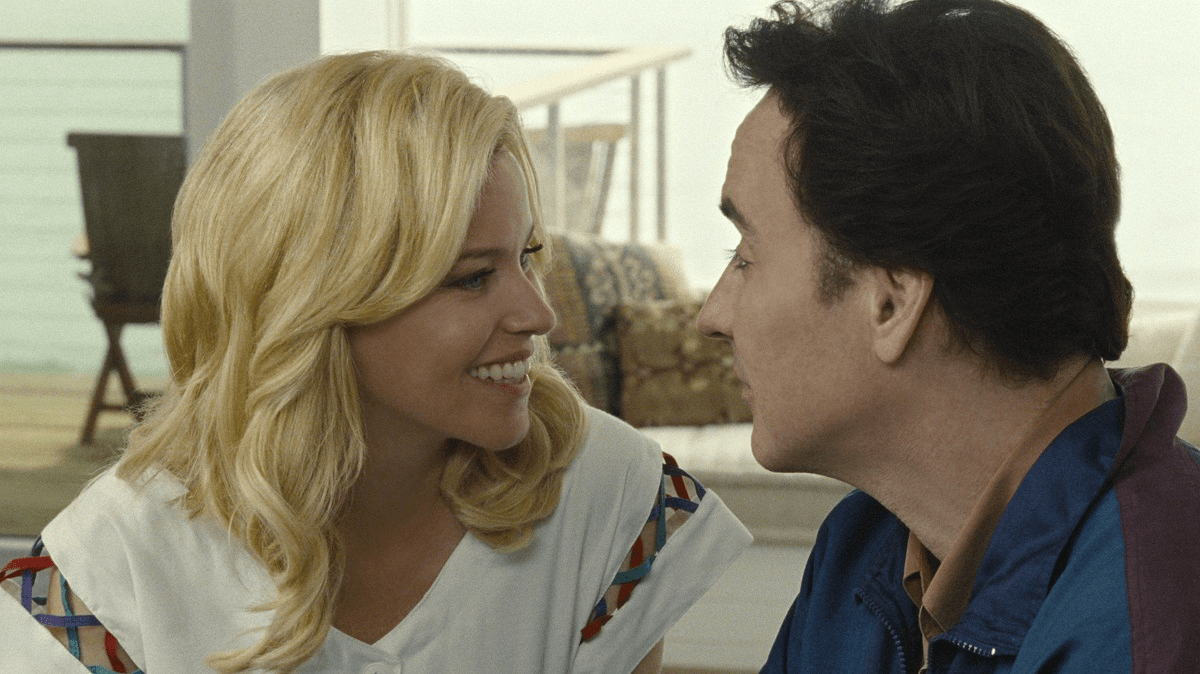
I wish I had more time to watch movies than I do. The list of them I’d be ashamed to admit I’ve never seen is quite long and grows by the day. For example, when Brian Wilson, the former leader of the Beach Boys, died in 2025, memorial articles referenced Love & Mercy, which came out ten years prior. Wilson’s passing finally motivated me to see the film, which had been routinely praised for its performances by Paul Dano and John Cusack. That praise was well-deserved, because the movie is one of the best biopics about a musician I’ve seen.
Biopics often chart the rise, fall and resurrection of their subject. The formula has been used so often that the parody Walk Hard nearly killed it off for good Love & Mercy, however, is not the typical biopic. It focuses on two periods of Brian Wilson’s life, when he was a young man at the peak of his creative powers, and simultaneously when he’s older and a shell of his former self. As was the case with Steve Jobs, this approach produces a more intimate portrait of Wilson, seeing how he acts, how he creates, how he interacts with others. We don’t get all of the historical facts, but the movie is much more interesting for avoiding that approach.
The parts of the movie featuring the younger Brian encompass the time between the release of Pet Sounds in 1966, which was a critical darling but a commercial flop, and the production of “Good Vibrations”, which was the band’s biggest selling single. Because the movie was made with the approval of Wilson, it features many of the band’s hit songs. Having them isn’t critical for a movie like this to be effective (see: Pricilla), but it certainly helps drive home just how talented Wilson was.
As depicted by Dano, Wilson is affable and quirky, a gentle giant who one couldn’t see hurting a fly. The movie implies this was the result of his horrific upbringing at the hands of his abusive father, Murry Wilson (Bill Camp). In one scene, one of Brian’s brothers mentions how Dad used to beat them with a belt. They shrug it off, but you can tell it left lasting scars on Brian.
When his kids were too old to be physically punished, Murry resorted to psychological abuse. Murry was particularly mean towards Brian, sharply criticizing “God Only Knows” for not understanding the song’s mood swings. (Paul McCartney said it was the greatest song he never wrote, by the way.) It doesn’t take a genius to realize that Murry, a failed musician, is jealous of his son’s talent and punishes him by treating him with contempt, which has disastrous repercussions. Brian wants his father’s praise, but when Murry refuses to give it Brian pushes himself even harder. The self-induced stress gives Brian panic attacks and has him talking to himself. Even though we know where this will lead, it’s difficult to watch.
The high point of this part of the movie is an extended sequence where Wilson conjures “Good Vibrations” out of thin air during a prolonged recording session. Like most geniuses, Wilson gets his inspiration directly from God and translates it for everyone else in real time. Watching a peevish Mike Love complain over how long it’s taking to make the song is comical in retrospect.
Murray couldn’t let Brian have his biggest triumph without punishing him, which he does by selling the publishing rights for all of the band’s songs for a huge sum of money. Brian is crushed by this betrayal, the result of trying to please a man who he can never please. Brian’s resulting depression incapacitates him for a long time, and the Brian that emerges from that phase comprises the other half of this tragic story.
About twenty years later, Brian (now John Cusack) goes to a Cadillac dealership and is immediately taken with Melinda Ledbetter (Elizabeth Banks), a salesperson who doesn’t recognize him. Brian, however, is immediately taken with Melinda, and for good reason. She epitomizes much of what he wrote about, a California Girl who’s all grown up.
Melinda notices that Brian is being watched closely by several men. When she shows Brian a Cadillac Fleetwood, he locks the doors and matter-of-factly mentions that his brother (Dennis) drowned two years ago. And that he’s no longer married. Brian’s out-there demeanor makes Melinda more curious than uneasy, probably because she’s met a lot of rich weirdos in her line of work. After some prompting by a handler, Brian gets out of the car. One of the watchers, a man in a bad wig, introduces himself as Dr. Landry (Paul Giamatti). He reveals that the peculiar man she’s been talking to Brian Wilson of the Beach Boys. Stunned, she watches the odd group leave, only to later find a piece of paper with “Lonely Scared Frightened” written on it.
The relationship between Brian and Dr. Landry becomes clearer to Melinda during their first date at a Moody Blues concert, when they are accompanied by Landry and some hangers-on. When Melinda says something to Brian, Landry immediately asks about it. From there, Landry insists on knowing everything about their interactions. The level of control Dr. Landry asserts on Brian concerns Melinda, but she continues to see him despite the red flags.
Melinda and Brian’s relationship takes a bad turn when Landry finds out that Melinda and Brian have had sex. (Even Landry can’t control Brian’s libido.) At a barbecue, Landry refuses to give Brian something to eat when he’s starving. (Landry had Brian on a strict diet.) When Brian impulsively acts out, Landry humiliates him in front of everyone. After that incident, Brian stops calling Melinda and she keeps her distance.
Fortunately for Brian, his housekeeper Gloria (Diana Maria Riva) recognizes that Melinda was a positive influence and reaches out on Brian’s behalf. Melinda is apprehensive about getting back together with Brian, but when she sees how much he’s regressed in her absence, Melinda decides to extract him from Landry’s clutches for good.
Recommendation
I didn’t fully understand the appeal of biopics about a brilliant son and his abusive father until I watched Love & Mercy. Thematically, it’s very similar to Shine, the story of pianist David Helfgott. He was mentally destroyed at the hands of his father, only to reemerge years later after meeting a kind therapist. In those movies (and 2026’s Michael), we root for the tortured genius to triumph, where the definition of victory means surviving the experience.
For those who’ve been in an abusive relationship with a parent, Love & Mercy reaffirms that there’s nothing a child can do to make them happy. If one of the greatest songwriters of all time couldn’t please his own father, there’s little chance that anyone without his extraordinary talent would have had a better outcome. In other words, misery loves company.
The success of this film rests almost entirely upon two bravura performances by Paul Dano and John Cusack. The former represents the genius before his descent, with the latter portraying his older, irreparably broken self in the grips of another controlling father figure. While both play the same man, they look and act entirely different. It’s odd at first blush, but it works because the two versions of Wilson were so entirely different.
Dano’s moony-ness is well-suited to young Wilson’s loopy genius, and the shag wig drives home the physical resemblance. Cusack, on the other hand, epitomizes Wilson’s fractured mental state while under the control of Dr. Landry. Cusack doesn’t look like Wilson at all, but it doesn’t matter because of the uncanny way he channels Wilson’s persona at that point in time. Cusack certainly could have been covered in facial prosthetics to make him look more like Wilson, but that would have been a needless distraction from his impressionistic performance of a damaged man begging to be rescued.
The supporting performances in this movie are terrific. I hated Paul Giamatti’s loathsome Dr. Landry from the first moment he appeared on screen in his awful wig. It takes talent to play someone so creepy and not have him become a cartoon villain. Bill Camp is menacing as Wilson family patriarch Murry, a jealous SOB who tortures his son and enjoys it. Rounding out the trio of bad men in Wilson’s life is Jake Abel’s contemptuous Mike Love, who rages when cousin abandons the simple pop ditties that made him rich.
Elizabeth Banks has always been a beautiful presence, and she physically resembles a ray of sunshine here as Melinda Ledbetter, with her blond hair, bright smile and gleaming jewelry. It’s no wonder Wilson saw Melinda as a beacon of hope when he was at his lowest point. What makes Banks’ performance so effective is how calmly she plays things throughout, always responding to Wilson with compassion and empathy despite his bizarre lifestyle. It’s a very atypical performance for Banks, and one of the best in her career.
Bill Pohlad hadn’t directed a feature film in twenty-four years, but you’d never know it. The scenes set in the Sixties feel authentic, and Wilson’s psychological issues are always handled respectfully. I usually dislike the narrative gimmick of ping-pong between the past and the present, but it works here because it suits Wilson’s convoluted life and builds to a very emotional climax with Wilson in concert. Pohlad’s film is very sympathetic towards Wilson and Ledbetter, not so much for the rest. I have no idea what constitutes the “truth” of Wilson’s story, but this version of it moved me in a way I hadn’t anticipated.
Like all biopics, Love & Mercy is on the side of its subject and victim, Brian Wilson, the founder of the Beach Boys. The story it tells of abuse, love and survival is familiar, but the movie transcends the formula through its time-weaving narrative, its craft and several career best performances among the cast. Highly Recommended.
Analysis
Before seeing Love & Mercy, I never liked the Beach Boys. I always thought their music was corny. In the Beach Boys versus the Beatles comparisons, I was solidly Team Beatles. Even the Beatles’ simplest songs (“Eight Days a Week”, “I Saw Her Standing There”, “Can’t Buy Me Love”, “Please Please Me”, “I Wanna Hold Your Hand”) had an edge to them that the Beach Boys never had. To be fair, the Beatles were a rock band, which the Beach Boys never were and didn’t try to be. Regardless, my opinion of the Beach Boys was that they were for squares.
Besides making me sympathetic towards Brian Wilson, the movie gave me insight into why he wrote the songs he did. Granted, all biopics are an invitation for us to play “armchair psychiatrist” with the subject. We see their turbulence and speculate as to how it was reflected in their art. More often than not, these movies are content to remind us that the person in question was great, but not why they wrote the songs they did.
Bohemian Rhapsody, for example, suggests that Freddy Mercury wrote the title song as a reaction to his unsettled love life and rejection by his parents. But why did he structure the song like an opera, with a dialog between the put-upon lead and a chorus, and then have it switch to a traditional rock song in the middle?
Michael, which came out this year, offers similar takes on two of his biggest hits, “Beat It” and “Thriller”. Michael Jackson wrote the former after seeing reports of gang violence on TV. He never experienced it first-hand, though, because he lived a very posh life at that point. So why was he driven to write a song about it? Fans know that Michael Jackson loved horror movies, which provided the inspiration for “Thriller”. But how did he take his fascination and appreciation of those movies and channel them into a song?
Love & Mercy is one of the few biopics about a musician that gave me more than fan-level adulation. It tries to explain why Wilson did what he did. Of course, what follows is my interpretation and your mileage may vary.
The songs Brian Wilson wrote for the Beach Boys reflected his horrible family life. Because he was unloved as a child, many of his songs exalted the simple things that gave him joy: girls with bushy blond hairdos, racing cars, hamburger stands, surfing, sailing. No matter how badly his father treated him, Wilson could turn to those signature things that epitomized the California lifestyle to lift his spirits.
When it comes to Wilson’s more complex compositions, the movie asked me to interpret them from the viewpoint of a man yearning for a life he would never have. “Good Vibrations” is about a woman he’s just met who makes him believe that she’s “the one”. Everything about her excites him like a jolt of electricity. Wilson tells us that she’ll raise him up to a higher plane of existence, leaving his troubles behind.
Similarly, Wilson’s “Wouldn’t it be nice” is an ode to settling down. He can’t wait until he and his lady love are married so that he can finally experience what a happy home is like. When Wilson sings “Happy times together we’ve been spending, I wish that every kiss was never ending,” he’s envisioning a married couple who love each other and are affectionate towards each other, something he’s only seen from a distance.
Where things get really interesting is with “God Only Knows”. It’s not surprising that Wilson’s father didn’t like the song, or understand it. Whatever capability Murry had for showing love died years ago. The song Wilson sings to him early in the film has the perspective of a man who is panicking over the thought that his true love might be leaving him. Wilson tries to assure his love that life will still go on if she does what he fears, but since the world would have nothing left to show him, he might check out permanently. Not a very comforting thought, is it?
What Love & Mercy told me is that those “square” songs about surfing and T-Birds and being married were actually about something else entirely. They were about a man who wanted a happy life and never really got it. A man who took enjoyment from what he could and was melancholy when he realized what he was missing. A man who wanted to be loved, saw others experiencing it, but found it always just out of reach. The songs Wilson wrote for the Beach Boys may have been happy and joyful, but he was anything but.
(I wrote the following shortly Brian Wilson’s death and having finally seen Love & Mercy.)
Anecdotes
When Brian Wilson, founder of the Beach Boys passed away on June 11, 2025, I did what I assume most people do whenever a famous celebrity dies. I reflected on how that person impacted my life. I could only think of two instances where Wilson’s songs left a lasting impression on me.
The first is when I was in high school. One evening, I was invited to hang out with a bunch of classmates. Evenings like this were a rarity because I lived miles away from almost all of my classmates and rarely had the means to join them. About ten of them picked me up and we cruised around before arriving at our intended destination. I think it was a classmate’s house to work on a parade float, but I can’t say that with certainty.
As we drove along, the car radio began playing “Good Vibrations”. For whatever reason, a bunch of us began harmonizing along to the vocals, myself included. Although it only lasted a few minutes, it represented one of the few memories from high school I remember favorably. It was a rare moment when I felt accepted by those who lived a completely different life from mine in many respects. It was incredibly fun, and perhaps that’s why everything that happened later that evening was lost over time, for me at least.
The second instance when Brian Wilson affected my life was in 1993. I took a girl to the Detroit Film Theater to see Theremin: An Electronic Odyssey. I still remember how impressed she was that I chose to do something special for what I believe was our first date. She complimented me on how the plans I made for us reflected my interests, which made the evening memorable. Although she and I weren’t together long, it was a valuable lesson that served me well when I met my future wife.
Theremin includes an interview with Brian Wilson, because “Good Vibrations” famously includes the instrument. When the interviewer asks Wilson why he used it in the song, Wilson’s response starts out fine, but then goes off the rails and turns into gibberish. The audience laughed, and I did too. The joke I’d heard often about Wilson was that he fried his brain by taking too much LSD in the sixties. However, the interview was taped only two years after Wilson was freed from Eugene Landy’s control and overmedication. He wasn’t “normal” then, and probably never was for the rest of his life.
I never really gave Brian Wilson (or the Beach Boys) much thought for most of my life. He had a presence in it because of the huge impact he had on popular culture, but I never sought to understand him until after he died. Love & Mercy forced me to look below the surface and see the immense sadness underlying Wilson’s artistry and accomplishments. It’s a great film because it helped me see Wilson in an entirely new light. Now, whenever I hear a Beach Boys song on the Sixties channel, it hits completely differently because I understand the man behind those songs and can sympathize with his longing for joy, happiness and love, and that he possibly found them late in life.

