
In one form or another, the MCU films released after the conclusion of the Infinity Saga have been trying to answer the same question: who will be in the next incarnation of The Avengers? The six years haven’t provided us with any definitive answers outside of Anthony Mackie’s version of Captain America, who appears to be in because of his brand. There simply can’t be an Avengers squad without some version of Captain America on it. Every other superhero we’ve seen so far appears to be in play for a spot on the roster, which is strange considering how well-planned Marvel’s films seem to be.
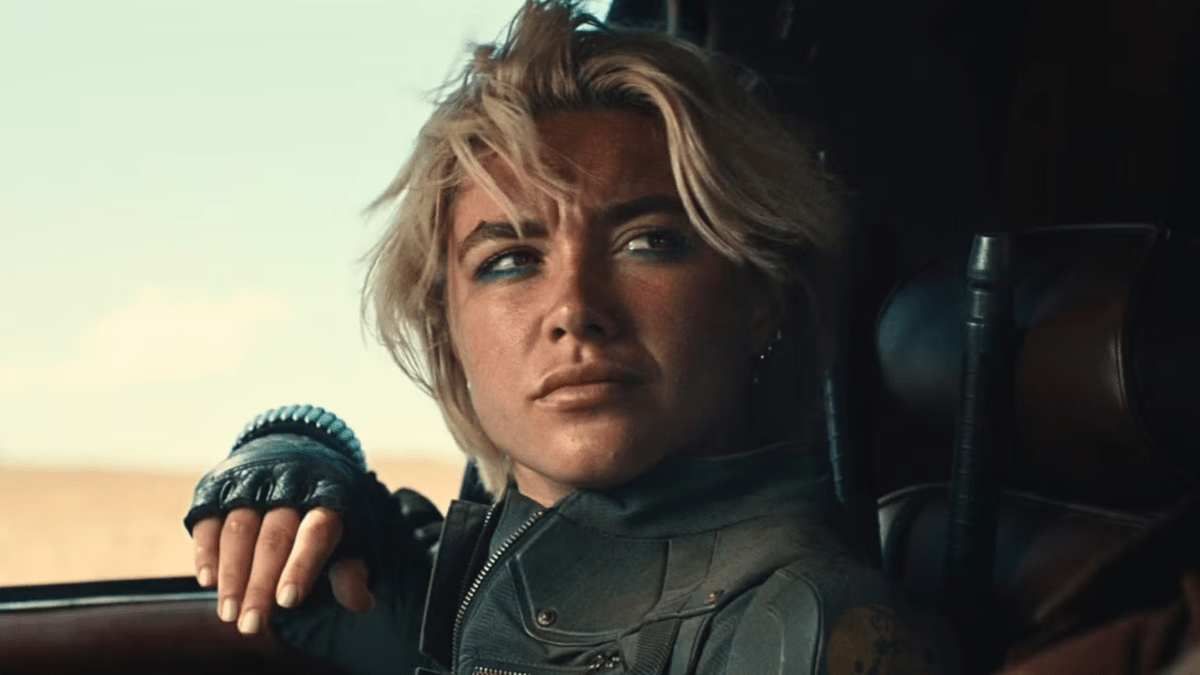
Thunderbolts proposes that Yelena Belova should not only be an Avenger but a leader as well. This character’s sudden rise to prominence is surprising, considering that she has only appeared in a supporting role in the Black Widow movie and the Hawkeye Disney+ television show. While the Avengers do have a vacancy in the Russian female super-spy department, Yelena’s elevation to the front of the line is because of the actress playing her.
Although Thunderbolts* is named after the team Yelena belongs to, the movie is about her getting out of her post-snap funk and becoming the hero her now-deceased sister Natasha (Scarlett Johansson) was. Like several other surviving Avengers, she’s coming to grips with what she lost while she was “away” for five years. All things considered, it’s no wonder she settled on a life spent drinking and doing dirty deeds for Valentina Allegra de Fontaine. As she says, anything is better than sitting around staring at your phone thinking about all of the terrible things you’ve done. Like her sister, Yelena has red in her ledger that she can’t erase.
This is how Yelena finds herself in the fix she’s in at the beginning of the movie. She tells Valentina she wants to be something besides working in the shadows. To her surprise, Valentina says she’ll make that happen right after this next job. Yeah, Yelena really shouldn’t take Valentina at her word, but Yelena’s desperate for a change. Perhaps this is why she visits her “father” Alexei Shostakov (David Harbour). He hasn’t spoken to her in a year, but he’s the only family she has left.
Alexei has become a slob who drives a limo for a living. He can’t accept that the world has forgotten about him and still clings to the hope that he can reclaim his former glory as the Red Guardian. When Yelena tells him that she’s been working for Valentina, he asks if she can put in a good word for him. There definitely isn’t anything more embarrassing than your father asking you for a job, is there?
It just so happens that Yelena’s next assignment is one that will eliminate her, as well as all of the other incriminating evidence tied to Valentina. This includes the other bad actors who did Valentina’s bidding, including the former US Agent John Walker (Wyatt Russell), Ghost (Hannah John-Kamen) and Taskmaster (Olga Kurylenko). Valentina clearly was inspired by The Dark Knight and sent each of her minions with orders to kill each other. (If you’re going to rip something off, go big I say.)
After some obligatory fisticuffs and the surprising death of one of the above, Bob (Lewis Pullman) appears from a storage container. Like the others, he doesn’t know why he’s in a room full of boxes about to be incinerated. When the bad guys stubbornly refuse to kill each other, Valentina’s henchperson Mel (Geraldine Viswanathan) turns on the heat. Bob comes up with a plan for them to escape certain death, which they do, only to face a group of heavily armed soldiers with orders to take down our anti-heroes with lethal force.
Since, bad guys always like to witness the results of their handiwork, Valentina is present to give the order to Holt (Chris Bauer) to attack. After Yelena and the others fight back the first wave, they nearly escape using the old “wear the other guys uniforms” trick. But things go sideways and Bob sacrifices himself so that his new friends can escape. However, as Yelena and the rest look on, horrified and saddened, Bob rises up and flies away. Hmm, Valentina thinks. Perhaps that top secret Sentry program that she started years ago and shuttered when it was a dismal failure worked after all.
It turns out that the Sentry program was designed to create a superhero chemically, and Bob was among the test subjects who presumably died. (If you’re familiar with Amazon Prime’s The Boys, this is the Homelander plot in Marvel form.) Valentina wanted to create a superhero who is indestructible yet mentally malleable, and accomplished that with Bob. However, there’s something not quite right about Bob. When he signed up for the Sentry program, he was scuffling around Malaysia, one of many places he visited while dealing with issues stemming from his awful childhood. Did Valentina give a mentally unstable person God-like powers? Uh-oh.
After Yelena, Walker and Ghost escape from Valentina’s secret compound, they’re rescued by the Red Guardian and subsequently captured by Bucky Barnes (Sebastian Stan). He suspects them of being in league with Valentina and intends to have them testify about what she’s had them do before a congressional subcommittee. (It’s so weird that Bucky is a politician now. Marvel wisely refuses to state whether he’s a Republican or a Democrat.) Before he can get them in front of microphones, something bad is going down in Manhattan. A mysterious black figure is making people go poof. Since there are no Avengers to confront this terrifying new foe, it’s up to Bucky and the rest of the Thunderbolts to come to the rescue.
Recommendation
Thunderbolts* is a different kind of Marvel superhero movie. Of course, that description comes with caveats. It isn’t the first movie about a team who constantly snipe at each other. (That would be the Guardians of the Galaxy.) These are not the first superheroes haunted by the slings and arrows life has thrown at them. (This applies to almost every Marvel superhero.) And these heroes aren’t the first superheroes who are “grounded”–meaning that they can’t can’t fly and are reduced to punching and kicking at street level. (Take your pick.)
What is different about this movie is its focus. Instead of the hero’s ongoing mental anguish providing texture in between action sequences, it is front-and-center in this movie. The story is about how this group of bad guys get past their personal troubles and become the heroes they want to be. It’s no spoiler to say that they get there by the end, but they do so in a way that represents a significant departure for the MCU in many ways.
There are still big action sequences in Thunderbolts*, all of which are well-choreographed and filmed in a way reminiscent of the Netflix Marvel TV shows (that are now on Disney+). I’d read that director Jake Schreier emphasized using practical effects as much as possible, and it shows. It’s odd to praise a superhero movie for going the extra mile to ensure that the story looks like it takes place in real locations instead of CGI sets, but I’ll praise it nonetheless.
Although Thunderbolts* is about a team, it’s really the Florence Pugh show. This says as much about Pugh’s star power as her acting abilities. She’s been an exceptional actor for years now, and was nominated for an Academy Award when she was twenty. If anyone wonders why she is so acclaimed, they only need to see this movie to understand why. She infuses her character with so much self-loathing, residual trauma, ennui, anger, and sorrow that for long stretches the movie is a character study. She delivers a monologue so gut-wrenching that it brought tears to my eyes. It’s paradoxical that one of the least powerful superheroes is played by one of the MCU’s best actors, but it’s happened before so I won’t quibble.
Pugh is so good that she leaves the rest of the cast with few opportunities to shine. David Harbour and Julia Louis-Dreyfus promptly steal whatever scenes they’re allowed to steal. (Harbour’s scenes with Pugh are highlights.) Lewis Pullman turns what could have been a redundant take on Adam Warlock into an intriguing ball of ticks and quirks. Hannah John-Kamen’s Ghost is the most visually interesting hero of this group by far and makes her presence felt. Wyatt Russell has fun playing an insufferable jerk. Sebastian Stan remains the MCU’s biggest mystery to me, though. After being so good in Captain America: The Winter Soldier he’s mostly drifted through his subsequent appearances. He gives off a vibe of doing what’s required of him and nothing more, which is a shame because he’s a better actor than he’s shown here.
Thunderbolts* may not be everyone’s idea of a good time at the movies, but I appreciated it for doing something (mostly) different and making me feel something I rarely feel about superheroes: compassion. Like Guardians of the Galaxy Vol. 3, it takes you to emotional places you never thought you’d go in a superhero movie. Recommended.
Analysis
A majority of Marvel Cinematic Universe films released in the wake of Avengers: Endgame have focused on characters coming to grips with what they lost because of “the snap”. When you’re gone for five years and suddenly reappear, I would expect the aftershocks from that experience to be traumatic. However, the MCU has mostly treated what happened to those characters as an inconvenience to be shrugged off.
Some struggled with the end of a romantic relationship (Doctor Strange, Thor, Star-Lord). Others drifted with a lack of purpose (Thor, Ant-Man, the rest of the Guardians). Spider-Man dealt with the death of his mentor by going on a European class trip, then fretted when his secret identity was exposed. Sam Wilson (a.k.a. Falcon) debated accepting the mantle of Captain America. Bucky Barnes was emotionally withdrawn, basically the same as before. Of course, everyone doesn’t process grief the same way. Aside from Wanda Maximoff, those who returned adjusted to their new lives surprisingly well.
For those who didn’t see the first season of Hawkeye on Disney+, it includes the moment when Yelena is snapped back into existence. She’s in her apartment, but after a moment she realizes that everything is wrong. The decorations have changed and another family lives there. Yelena is gobsmacked when she realizes that she no longer has a home. The terror and dislocation Yelena feels is palpable, a testament to Pugh’s acting skills. What’s even more surprising is that this is the only scene in the MCU that shows what it would have been like to return and find your world turned upside down. (It’s also criminal that this scene and the rest of Pugh’s performance was relegated to a streaming television show and not an actual movie.)
When Yelena learns that her sister died while retrieving an infinity stone with her partner Clint Barnes, she decides to exact her revenge by killing him. She refuses to accept that Natasha would have sacrificed herself so that Clint could be with his family again. After all, Natasha had a family. Not a biological family like Clint’s, but a family nonetheless. Angry at the belief that Clint may have selfishly killed Natasha to bring back his own family, Yelena confronts him. It’s only after Clint tearfully recounts what happened that Yelena believes him and lets him live. However, this was just the next step in Yelena working her way through her feelings over the death of her sister.
Thunderbolts* picks up four years after Hawkeye, and Yelena is not doing well. Without her sister to confide in, she’s been living in a constant state of depression. Like Wanda, she’s the only character in the MCU who actually lost someone fighting Thanos. Although Yelena did take some of her anger out on Clint, she held back before she did something she would have regretted. But the knowledge that her sister died for the greater good provides little comfort. Natasha was Yelena’s rock, but now she’s gone.
As we saw in Black Widow, Natasha was the only member of their fake family Yelena bonded with. Now that Natasha is dead, Yelena has nobody else she trusts enough to confide in. Even her buffonish father hasn’t contacted her in a year. Like Wanda, Thanos took away what mattered most to Yelena, leaving her feeling empty and alone. When we see Yelena again in Thuderbolts*, she’s immersed herself in work and drinking to get through the day. Life has left Yelena a shell of the person she once was, someone functional but barely getting by.
For the sake of comparison, the difference between Yelena’s post-snap experience is world’s apart from that of Stephen Strange. Although he lost his title as the Sorcerer Supreme, he still has his Sanctum Santorum. He lost Christine to another man, but he killed their relationship years ago. Aside from those setbacks, he’s leading the same life he was before. Amazingly, the devastating effects of the snap are only felt by his one-time surgical nemesis, Dr. Nicodemus West (Michael Stuhlbarg).
Starting with Hawkeye and concluding in Thunderbolts*, Yelena has been working through the five stages of death and dying. Although it took Marvel six years to arrive at this point, the dramatic payoff was worth the wait. That a franchise this huge devoted an entire movie to resolving a character journey this dark is remarkable.
The first pandemic superhero
As has been mentioned elsewhere, it was uncanny how the Infinity Saga “predicted” the Covid-19 pandemic. At the risk of sounding glib, both were about an existential threat that appeared, killed a lot of people in a short period of time and shut most of the world down for several years. Since then, whenever I see the opening scenes of a desolate New York Avengers: Endgame, I’m instantly taken back to 2020. I can still recall how eerie it was going on walks with my son and hearing nothing on what usually were busy city streets.
As I watched Yelena try to pull herself together after a horrific period in her life, I wondered if the pandemic influenced the filmmakers involved with Thunderbolts*. Like everyone who survived the pandemic, Yelena’s life was on hold for several years. She lost a loved one and wasn’t able to say goodbye. The experience left her in a deep depression that even work and alcohol couldn’t suppress. Yelena mourns the life she had but can’t return to. Coincidence or not, Yelena Belova is the first and only superhero who accurately reflects what we all experienced during the pandemic and its aftermath.
Thunderbits and pieces
“Daddy, I’m so alone.” Pugh delivers one of the most devastating line readings in all of the MCU.
Killing off the Taskmaster in the first act was a surprise. That the movie didn’t undo it later on was an even bigger surprise. If you’re going to have a movie about assassins, one of them has to kill someone of importance in the movie.
Wyatt Russell playing John Walker as an obnoxious, entitled jackass is brilliant. While Tony Stark, Peter Quill and Stephen Strange have each had their moments, none of them come close to Walker’s level of being an insufferable jerk in this movie.
It’s unfortunate that Thunderbolts* is a team movie because it allowed for only a handful of scenes with David Harbour’s Alexei and Pugh’s Yelena. Alexei was mostly used mainly for easy laughs in Black Widow and while that carries over into this movie, he’s given a couple of dramatic scenes here that show there’s more to the character than cartoonish bravado.
After hearing Benedict Cumberbatch and Tom Holland’s unconvincing American accents for years, it’s refreshing to hear Hannah John-Kamen’s British accent. Why Marvel didn’t force her to do the same is a minor mystery.
Speaking of Ghost, her character was the only part of Ant-Man and the Wasp I liked. I’m glad Marvel included her in Thunderbolts* because her superpower is visually interesting and distinguishes her from her punch-kick teammates.
Wendell Pierce wins the “What the heck is he doing in a superhero movie?” award as “Congressman Gary”.
On the other hand, kudos to Marvel for having veteran character actor Chris Bauer show up as a military commando. He’s been in so many things that I immediately recognized him but couldn’t remember where. Turns out it was from HBO’s True Blood, where he was in 81 episodes.
Someone needs to check Sebastian Stan for a pulse while he’s playing Bucky. He looks so bored throughout this movie I wonder if it’s time for him to hang up the mechanical arm and move on.
Florence Pugh has said how grateful she was that Scarlett Johansson took her under her wing. That being said, it is remarkable how Pugh has achieved a level of prominence in the MCU from only a few appearances that Johansson never did in ten years. While I’m happy for Pugh, Johansson deserved better.
 Detroit Cineaste