
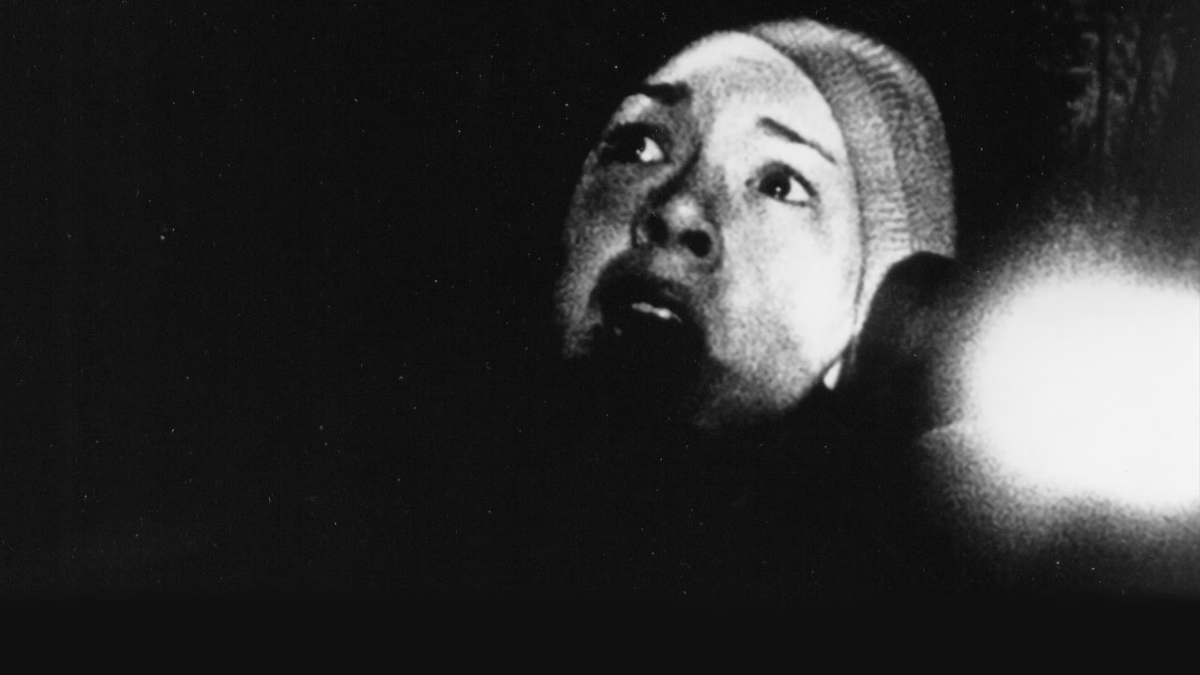
Recently, someone posted a topic on Reddit titled “What is everybody’s opinion on “The Blair Witch Project”? Is it a modern-day horror classic? Is it overrated? Is it in between? How does it hold up today?” While I did see the movie in a theater when it was first released, I can’t remember watching it since. Given the twenty-five year time lapse, I didn’t trust that my memory of the movie would be accurate and I declined chiming in. However, reading the comments did bring back memories of the considerable buzz the movie had in summer of 1999.
The Blair Witch Project was notable for having a marketing campaign that insisted the footage in the film was real and that the stars of the movie were still missing. Entertainment magazines like Entertainment Weekly reported that the movie was a sensation in the making after premiering at the Sundance Film Festival. Critical consensus was solidly positive. EW’s Lisa Schwarzbaum gave it a B. Roger Ebert, who people insist hated horror movies, gave it four stars. Everything combined to successfully position the movie as a must-see event in a summer season filled with blockbusters.
The Blair Witch Project grossed $140m domestically in the summer of 1999, an astonishing result considering the other blockbusters released that season:
- Star Wars: Episode 1 – The Phantom Menace
- The Sixth Sense
- Toy Story 2
- Tarzan
- The Mummy
- Austin Powers: The Spy Who Shagged Me
- Runaway Bride
- Notting Hill
- American Pie
- The Haunting
- Eyes Wide Shut
In addition to The Blair Witch Project being wildly popular that summer, it also became the tenth-highest grossing film domestically for all of 1999. Again, for a movie that cost less than a million dollars to break through in that magnitude is simply amazing.
Several people commented on the above post stating that The Blair Witch Project is “of its time”, an explanation I agree with. Several factors that drove interest in the movie are much different today. As I mentioned above, general audiences learned about films the old fashioned way. They saw trailers on television or in theaters. They saw advertisements for movies in the newspaper. They read and saw reviews of movies as part of news broadcasts or on Siskel & Ebert & The Movies.
Although the internet existed back then, it was used more for marketing purposes. Today, the internet is largely a source of spoilers. Through the omnipotence of social media, anyone who sees a movie at a festival or early screening immediately turns to X, Facebook, Reddit, etc. to tell everyone what they saw. Back in 1999, the only way someone ruined a movie for you was if they were a blabbermouth. Instead of describing every surprise in a movie, friends would instead encourage each other to see it for themselves and talk about it later. You never knew if you were being encouraged to see something they thought was bad or good, just that they wanted you to experience it like they did, without knowing what was going to happen.
I distinctly remember watching The Blair Witch Project in a full theater. That rarely happens for me these days, as studios have trained audiences to wait as little as a couple of weeks to rent a movie at home. In 1999, you had to wait months before a movie was available at your local video store, or possibly a year to see it on HBO. Because of those exclusivity windows, people had no choice but to see a movie in a theater if they wanted to be able to talk about it with their friends and family. This resulted in opening weekends where theaters were filled on Friday and Saturday nights.
For people who insist that seeing a movie is the same at home as watching it in a theater with an audience, I would offer up The Blair Witch Project as an indisputable counter-argument to that line of thinking. Sure, home theater equipment is far better than it was twenty-five years ago, with enormous OLED screens and Dolby sound systems. However, there won’t be hundreds of people sitting around you reacting to what’s happening real-time. That was the situation for The Blair Witch Project, where the atmosphere in the theater was electric.
Just like the characters in the movie, nobody really knew what was happening. Heather (Heather Donahue), Michael (Michael Williams) and Josh (Joshua Leonard) are being attacked in the woods at night, but by what? The omnipresent video cameras, which the crew uses to fastidiously document their every move, curiously makes it impossible for us to see whatever is tormenting them. The protagonists certainly aren’t imagining things, because we see and hear what they do. We just never get any confirmation as to who (or what) is doing things to the crew.
Back in 1999, an audience for The Blair Witch Project was truly a captive audience. There were no smart phones back then to distract us while we waited for “something to happen”. Instead, everyone was resigned to watching the plight of the documentary crew until the movie’s finale arrived, which either left you even more frustrated or justified the experience. Personally, I thought that the ending, especially when seen with an audience, was an incredible bit of cinéma vérité. Even though I could never tell what was happening, my mind kept telling me it was horrible. The slam-bang conclusion held the audience’s attention completely until the final title card appeared. Then, when the lights went up, people finally started asking each other what they just saw.
It’s fair to say that the theatrical experience certainly played a huge role in why The Blair Witch Project was so successful. This is also probably why people who see it for the first time at home are left wondering what all the fuss was about. The movie’s popularity was lightning in a bottle, fueled by a brilliant marketing campaign, a spoiler-free entertainment news environment and a communal theatrical experience that made watching the movie an event. But what of the movie itself? Does it still hold up watching at home with no crowd to electrify the experience?
Rewind
Before renting the movie on Amazon Prime, I wondered if I was making a mistake. Would seeing it again lessen my opinion of the movie, which had been formed all those years ago? If my TL;DR introduction above proves anything, that wasn’t the case. Since I already knew what happened and how it ended, I was free to focus on the story itself. This yielded several surprising revelations.
One of the biggest complaints against the movie was how the constant camera jiggle made people nauseous. On my 55” screen at home, the bobbling camera was much more tolerable. The camera movement is clearly a trick that obscures how we never actually see the Blair Witch, or anything else that’s threatening. What it does do is put us into the mindset of the three protagonists. The images captured by the footage are more playful and respectful when things are fine, and antagonistic and jarring when they are the opposite. This is particularly true when the forces of evil pay the trio a visit at night. On that last part, all we see initially is their anxious behavior inside their tent. Then, when whatever is outside attempts to get inside, they flee into the darkness. Although a camera captures them running frantically into the night, it never reveals what was tormenting them. Considering the circumstances, I doubt I would have had the fortitude to stand still and get a closeup of the witch or whatever it was that wanted to kill me.
Since I already know what fate awaits the documentarians, the early scenes where they’re joking around now have an air of sadness. Heather and Josh are friends, and they’re joined by Michael because they need a sound guy. The initial minutes show them getting along fine. As they have a drink in their hotel room the night before they head to Burkittsville, there’s no indication of any animosity between them. They’re in their early twenties, cocksure and raring to shoot a documentary about the infamous Blair Witch.
The following morning, they shoot the opening scene at a cemetery, and they’re pleased with themselves. Both the footage and Heather’s narration are good, if unspectacular. With their project starting on a positive note, they head into Burkittsville to interview the locals about the Blair Witch. While the townspeople acknowledge the legend of the witch, what is more interesting to them is the story of Mr. Parr, an old hermit who resided on a mountain back in the 1940s. According to the legend, he killed seven kids. A younger man describes in detail the process Parr followed, and while what he says is undeniably creepy, it has no connection to the task at hand. Like Heather and her crew, we dismiss the story because it isn’t directly related to the Blair Witch, or at least we don’t see the connection. However, the inclusion of that seemingly unrelated bit of folklore lays the groundwork for everything that follows.
The first sign of friction is when Heather insists that they use a shortcut to get to Coffin Rock. The place is where a ritualistic sacrifice took place in the nineteenth century. What does either have to do with the Blair Witch? Nothing besides being another cool bit of spooky folklore that interests Heather. That night, they hear noises outside that sound like deer rustling about for food. From here on out, the three are trapped in cycle that they can’t escape. They can’t sleep because of things happening outside their tent, they run out of food, they are cold and exhausted from walking in circles. With each passing day, things grow more dire and they become increasingly irritable with each other.
As I watched the crew’s collective descent into psychosis, I noted that their downfall was largely due to personal weaknesses. Heather is overconfident in her knowledge of the woods and insists on taking shortcuts. Josh is a follower who also believes that checking a map he can’t read will get them to safety. Mike, who didn’t know either Josh or Heather before agreeing to work on their project, has a temper that reveals itself when he kicks the map into the river out of frustration. Although Mike was wrong to have thrown the map away, he was correct in his assessment that neither Heather nor Josh knew what they were doing. Together, the three underestimated how prepared they were for their undertaking and are ill-equipped to handle when things go wrong.
The biggest issue for Heather, Josh and Mike is that they need to not only carry hiking supplies, but also their heavy camera and sound equipment. As a result, they only take along enough supplies for the day when they head into the woods. When they eventually run out of food and water, they can’t think clearly, which is probably why they find themselves walking in circles. Not getting rest at night certainly doesn’t help, but getting out of a jam is a tall order when you’re also malnourished and dehydrated.
What’s clever about the movie is that although the movie never shows us what is terrorizing the crew at night, they clearly aren’t imagining it. We hear whatever they hear on the sound recording, including the sounds of twigs snapping, rocks dropping and what sounds like the voice of children. We also see their tent being shaken by something from the outside, which causes them to flee in a panic. There’s something in the woods that is scaring them, but what it is remains a mystery.
Things take a dark turn when Josh has what Mike describes as a nervous breakdown. I felt sympathetic towards Josh, because he’s just a carefree stoner. He’s a happy-go-lucky sort who has gotten through life by being nice. Josh is the exact opposite of Heather, who is a bit of a ballbuster. Josh also isn’t aggressive like Mike, which probably is why Josh became the first victim. Although Josh seems to come out of his psychosis fine, his disappearance the following morning is what leads the others to their doom.
A constant refrain of those who saw the movie is that it isn’t clear what happened at the end. The movie implies that Josh has been captured by evil forces, and his wailing suggests that he is being tortured. Heather finds a piece of Josh’s shirt wrapped in a bundle of twigs. Inside the cloth are what appears to be Josh’s bloody teeth. That night, Heather and Mike follow what sounds like Josh’s anguished cries for help into an abandoned house. Inside the house are the handprints on the walls, possibly from children. Could this be the home of Mr. Parr that we heard about at the outset of the movie? The house doesn’t look like it was built in the 1940s, though. And why would his murder victims leave their handprints on the walls?
As Heather and Mike desperately try to find Josh, they quickly become separated. Mike is assaulted by something unseen. When Heather finds Mike, he’s standing in the corner of the basement in a way reminiscent of the story they heard from the young man in town. While Heather calls out frantically to Mike, she’s assaulted by something off-camera. After a few moments of silence, the footage ends.
Since the movie doesn’t give us any indication of who attacked Heather or Mike, we’re left to use what little information we have to identify their assailant(s). Because we have so little to go on, there is no one right answer. One idea I had is that Josh led them to the house and attacked them. Another possibility is that someone from Burkittsville who got wind of the crew hiking in the woods tracked them down and attacked them. Or it could be that they were done in by the evil spirits that the locals insist reside in the woods. That would include the Blair Witch herself, the ghost of Mr. Parr, his victims or all of the above. Because of the vagueness of what we witnessed, the possibility of the Blair Witch and Mr. Parr forming an unholy alliance seems credible. The brilliance–and frustration–with the movie is how any of those possibilities can be true, or none of them.
My assessment is that although the movie is titled The Blair Witch Project, it’s not about her at all. It’s about how three naive young people went into the woods, encountered something malevolent and wound up being destroyed by it. The movie is a cautionary tale about the dangers of courting evil and not being ready for what answers. Regardless of what happened to Heather, Josh and Mike, their footage is a testament to not head into the woods if you’re not 100% sure you can deal with whatever you may encounter there.
A word on Heather Donahue
One refrain I’ve heard about The Blair Witch Project since its release is how annoyed people are with Heather Donahue’s performance. The complaint is that she comes off as screechy and bitchy, basically. I’ll go out on a limb and say that those who have voiced their intense dislike of Donahue’s character are predominantly male. As such, I’m convinced that their reaction is rooted in their discomfort with a woman being in a position of power over men. How so? Because when I envisioned a male actor playing the part, the underlying performance is unchanged.
Filmmaking has been (and continues to be) a very male-dominated industry. With that taken into account, Donahue’s character holds an extremely rare position of authority. As the producer, director, on-screen presence and narrator of the documentary, she’s the project’s undisputed leader. Accordingly, Donahue’s screen persona is brimming with self-confidence, which comes out in her interactions with Mike and Josh. Donahue is the dominant personality of the trio, who defer to her for every decision made. It’s obvious from the early going that she calls the shots, and Mike and Josh follow her marching orders.
Donahue’s role as leader results in a power struggle of sorts when Donahue’s abilities are called into question. After the three realize they’ve been walking in circles, the two men begin griping at Donahue. But their complaints never involve Donahue’s gender, just her choices. In their interactions with her, Mike and Josh never mention that she’s a woman, comment on her appearance or describe her using derogatory language. Any sexist attitudes towards Donahue come not from the film itself but entirely from the men in the audience. They want someone to blame for the male characters they identify with for being put in danger, and turn Donahue into an easy scapegoat.
This is not to say that Donahue is completely blameless in their predicament. As I mentioned above, she was overconfident in her abilities. However, even though Mike and Josh also share responsibility for what happened to them, neither of their characters experienced anywhere near the level of vitriol that Donahue did.
If Donahue’s character were gender-swapped, he would have the same personality and wielded the same authority over every aspect of the project. Likewise, Mike and Josh would have deferred to his leadership and complained when he eventually got them lost in the woods. The only difference would be in how the men in the audience would perceive a male Donahue under the same circumstances. In my opinion, they would have been much more sympathetic towards his failures than hers. Unfortunately for Donahue, she was held to a double-standard that often targets women in her position. She gets no credit for being successful but shoulders all of the blame when something that is not entirely her fault.
 Detroit Cineaste