
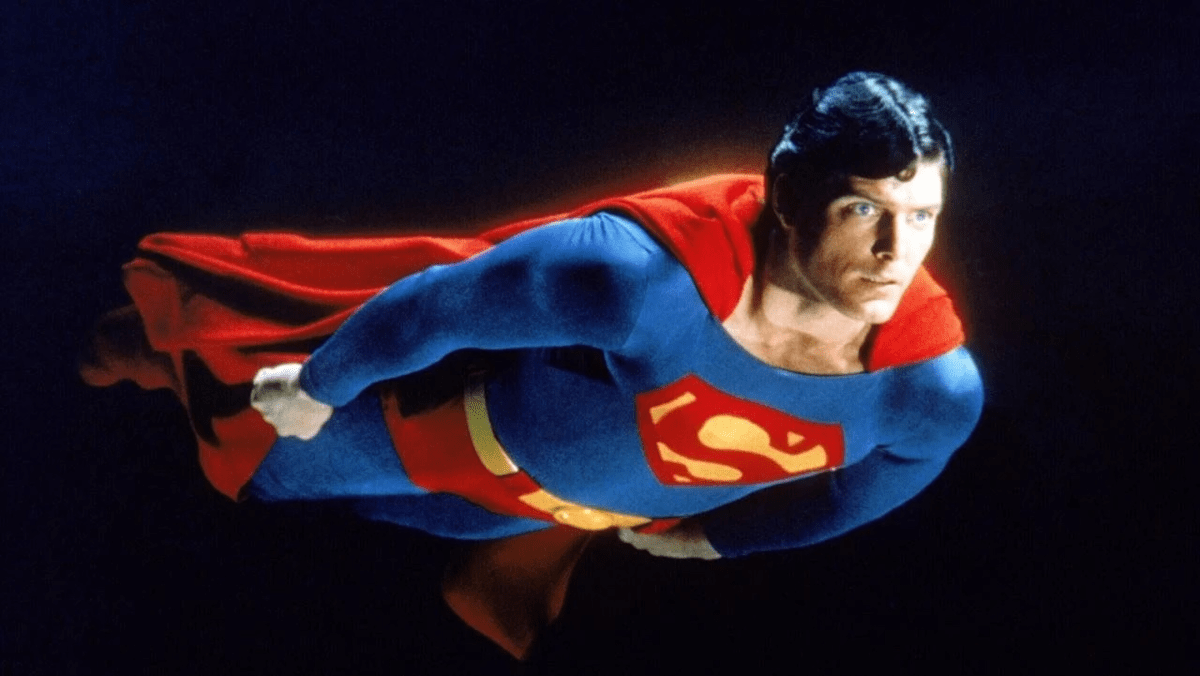
Super/Man would have been a fascinating documentary even if it had focused only on Christopher Reeve’s acting career. As a young man fresh out of acting school, Reeve nabbed the role of a lifetime: playing the Man of Steel in Superman. Although the part catapulted him into stardom and made him a fortune overnight, he chafed at his success. In an effort to be taken seriously as an actor, he sought out dramatic roles that he hoped would also win his father’s approval. After donning the cape three more times, his career finally appeared to go in the direction he wanted with a notable supporting turn in Remains of the Day. Then, a freak horse-riding accident left him paralyzed, robbing him of his career. For people as famous as Reeve, that incident probably would have marked a retreat from their public lives. Not so for Reeve.
In one of the most remarkable second acts in my lifetime, Reeve accomplished things few people would have considered possible. He directed several films and appeared on camera as well. Most importantly, Reeve became an activist for the disabled. He also spent the last seven years of his life raising money for stem cell research and advocating on behalf of those with spinal cord injuries. He spoke before cheering (and weeping) audiences at the Academy Awards and the Democratic National Convention. In many ways, Reeve’s second act was more impressive than his first.
While Super/Man adequately covers Reeve’s acting career and public life, its main interest is in showing us who he was when not on camera. We see him interacting with his family before the accident and after, which drives home how dramatically his life and wife’s had changed. Members of his family are on hand to provide commentary, including all three of his children and the mother of his first two children. Reeve’s wife Dana (now deceased) is included by way of interviews and home movies. Together, they paint a portrait of a man whose life was more than the characters he played or the causes he fought for. Reeve was a man in search of family stability who curiously rejected it the first time around. Fortunately, he got a second chance and embraced being a father to all of his children. Ultimately, it was the love and support of his family who helped him achieve the seemingly impossible. For many people, Reeve is known primarily as an actor and activist. What Super/Man tells us is that while those things were important to Reeve, what mattered most of all was his family. Recommended.
Analysis
Super/Man might be the first documentary to give me goosebumps within the opening seconds. Because it covers the life of Christopher Reeve, it begins with a montage of scenes of him playing his most famous role, Superman. Even though that movie is now forty-five years old, watching clips of it still made me as giddy as the first time I saw it in a theater. Case in point: the scene where Superman rescues Lois Lane after she falls from a helicopter. Even though I’ve probably seen that scene a hundred times, I’m amazed at how well it works. Like so many other exchanges between Reeve and Kidder, the dialog in this scene is priceless. After catching Lois in his arms, Superman calmly says “Don’t worry, I’ve got you.” Lois, shocked and amazed, replies, “You’ve got me? Who’s got you?!” Gets me every time.
The acting by Christopher Reeve and Margo Kidder throughout Superman is, of course, wonderful. Seeing them together again on the big screen, in the movie that made them international stars, was special but bittersweet. As I recalled the hardship they endured later in life, as well as that they are no longer with us, their scenes have a poignancy to them they never had before. Here they were, together, in a movie that nobody thought would work, blissfully unaware of where life would take them. When people talk about the “magic of the movies”, there’s no better example of what that means than Superman. Here is lightning in a bottle, forever preserved for future generations.
As Super/Man recounts, Reeve studied acting at Juilliard, pretending to be an amoeba alongside his fellow students. His roommate was Robin Williams, and seeing images of the two on the town in the Seventies is a treat. After leaving school, he was in a stage production that featured both William Hurt and Jeff Daniels in the cast. Talk about future star-power. Then he flew to London to screen test for the role of Superman. The suit didn’t breathe, making Reeve sweat profusely. Still, even with very noticeable saddle-bags, the qualities that won him the part register instantly. He’s confident, but not arrogant. Innocent, but not naive. Handsome, but not pretty. Masculine, but not threatening. Humorous, but not silly. In essence, Reeve was everything that we associated with Superman, only in real-life form.
Playing Superman was a dual-edged sword for Reeve. The role made him rich and enabled him to act in smaller art films, but the failure of those projects bothered him. On the one hand, Reeve played a character so well that nobody could envision anyone else in the role. On the other hand, he played that character so well that nobody could see him as anything else. It’s the same pitfall that made it difficult for other genre actors like William Shatner (Captain Kirk) and Mark Hamill (Luke Skywalker) to find work. George Reeve, who donned the blue tights for many years before Reeve, could have warned him of the pitfalls of playing the larger-than-life role. The only reason Harrison Ford (Han Solo) didn’t suffer the same fate was that he agreed to play another action hero, Indiana Jones. Reeve, however, didn’t want to be seen in that way, and played Superman in two tired sequels before leaving the role for good.
The movie briefly covers his acting career outside of Superman, which consisted of attempts to prove to everyone that he was more than a superhero actor. Somewhere in Time was too romantic for me to appreciate when it was released, but I’m still stunned that the movie flopped. He regularly sought out projects as far removed from Superman as possible, in an effort to finally impress his father. But that lack of approval haunted Reeve, which came through in interviews. F. D. Reeve was a highly regarded man of letters and was dismissive of his son playing a comic book character. What’s most telling in this documentary is that even though Reeve always knew he would never win his father’s respect, he never stopped trying.
All of the dramatic roles Reeve took came and went without notice. Deathtrap, Monsignor, The Bostonians, Street Smart, Switching Channels, Noises Off. Every time he offered a different side of himself to audiences, they rejected it. I still remember his timid performances in Switching Channels where he tries to resist the temptation that was Kathleen Turner in the Eighties. Surely he had to know that none of his fans wanted to see him playing such a wimpy character, but for Reeve doing roles like that was the point. The irony of Morgan Freeman getting critical acclaim and an Academy Award nomination for his supporting role in Street Smart certainly wasn’t lost on Reeve. The movie launched Freeman’s acting career but did nothing for Reeve, who gave his final performance as Superman that same year.
The first time I remember Reeve when Reeve received critical accolades for a dramatic role was in Remains of the Day. Although it was a supporting role in a movie headlined by Anthony Hopkins and Emma Thompson, his portrayal of Congressman Jack Lewis was effortless and commanding in a way that his other non-Superman performances had lacked. While watching the movie, I remember thinking at the time that six years after he last played Superman, Reeve finally found a suitable role for his talents. Then, two years later, his acting career was over.
When I’d heard that Reeve broke his neck while riding a horse, I wondered how that could happen. (My future wife, who rode horses recreationally, explained the accident to me.) Aside from my ignorance of equestrian-style riding, the fact that Reeve had nearly died and would spend the rest of his life paralyzed was shocking. For a significant portion of my life I had known Reeve as the actor who portrayed the Man of Steel in three movies. (I skipped the fourth one.) It was inconceivable to me that someone like Reeve, a man known for his physical presence, was permanently confined to a wheelchair. This simply can’t happen to Superman. It didn’t make any sense.
What Super/Man does extremely well is show us how Reeve’s injury not only affected him, but his wife and family as well. Before the injury, Reeve spent his free time being an outdoorsman. In addition to horseback riding, he skied, ice skated, flew planes, piloted boats, played multiple sports including tennis and soccer, and so on. His children from his first relationship discuss how the time they spent with their father always meant doing activities outside. Before Reeve’s accident, he was always physically active, always doing something. When the physical side of his life was taken away from him forever, the realization hit Reeve hard.
The movie includes footage of him recovering in a hospital bed and we hear his voice on the soundtrack. Reeve talks about how his mind kept revisiting things, especially the accident. “Why didn’t I just let go of the reins?” If he had, he could have shielded his body from the fall with his arms. Instead, he forgot to let go and landed squarely on his head and shattered two vertebrae in his neck. The feeling I got while listening to Reeve describe the incident is that he felt terrible about making such a stupid mistake. But the fact is that everything happened in an instant, and no one can say with certainty how they would have reacted in that situation.
While Reeve’s paralysis robbed him of his acting career and his physical independence, it didn’t take away his energy. He describes how before the injury, he largely “did things” with his children. Afterwards, he states that being paralyzed forced him to talk to them and made him a better father. (All three of his children state on camera that he was doing a good job before then.) Always the optimist, Reeve worked hard on his rehab, believing that new neural connections could be formed which would enable him to walk again. Although he eventually regained a small amount of purposeful movement, he was never able to wean himself off of the respirator.
Reeve was also known for being an activist when not acting. After the injury, he dramatically accelerated that aspect of his life. He became a tireless advocate for those with spinal cord injuries, and eventually established the Christopher and Dana Reeve Foundation. He lobbied for funding for stem cell research because he thought that it would lead to a cure for paralysis. He famously appeared in a commercial walking, something that made advocates for the disabled upset. I admired him for not backing down from his critics, stating that “there is no such thing as ‘false hope’, just hope.”
To his credit, Reeve was always honest about how much missed his former life. That said, I believe he was impressed by everything he did despite the challenges he faced every minute of every day. Reeve was one of those people who showed through his words and actions that a second act could be just as incredible as the first. Then, as quickly as the accident that changed his life, an infection took hold that ultimately killed him. His doctors kept him alive, resuscitating him several times until his wife could say goodbye to him at the hospital. His oldest son didn’t make it in time, hearing about his father’s passing while he was riding in a taxi from the airport. And if the Reeve family didn’t have enough tragedy, Dana passed away from lung cancer not even two years after Christopher’s death. But the story doesn’t end there, either.
As I listened to Reeve’s children speak about how they came together to lead the charitable organization their parents founded, I realized what this documentary had been saying all along. Early on in Super/Man, Reeve stated that his turbulent childhood led him to acting, because he appreciated telling stories where the ending was known. Although Reeve was loved by millions for his portrayal of Superman and respected for his work as an activist, what concerned him the most was being a good father. Or at least better than the one he had. With that in mind, seeing his children grown up and handling adversity together is the perfect ending to Reeve’s life story. Of all of his accomplishments, his family turned out to be the one I believe he would be the most proud of.
Bits and pieces
Robin Williams features prominently in Super/Man. Like Christopher Reeve, Williams is another actor who I grew up watching, and seeing him in this movie, years before Lewy body dementia would lead him to commit suicide in 2014, brought tears to my eyes. I think it was Glenn Close who says in this movie that she’s convinced that Robin wouldn’t have died like he did if Reeve were still around. I watched two documentaries on Williams during the pandemic: Robin Williams: Come Inside My Mind, and Robin’s Wish. If you are as big a fan of Robin Williams as I am, I highly recommend them.
Reeve’s combination of intellectualism, arrogance and candor always made him an excellent interview, including a famous one on David Letterman where he called out Marlon Brando for accepting two million dollars for a few days’ work on Superman. Check out a clip here.
Stockard Channing was also up for the role as Lois Lane. (Here’s her screen test) Super/Man mentions that Superman was the second-highest grossing movie of 1978. The top-grossing movie that year was Grease, which included Channing as Rizzo.
Although there are clips of Superman III in the movie, none of them include Richard Pryor, who also received top-billing in the movie. Instead, we see Superman battling his alter ego in the junkyard and grappling with computer cables. I know this movie is about Reeve, but for the film to not acknowledge Pryor, who was his co-star, was surprising.
The movie also makes no mention of the computer-animated version of Reeve that appears briefly in The Flash. Reeve’s children have said they had no involvement in approving their father’s appearance in that film, which left me wondering who did approve it.
 Detroit Cineaste