
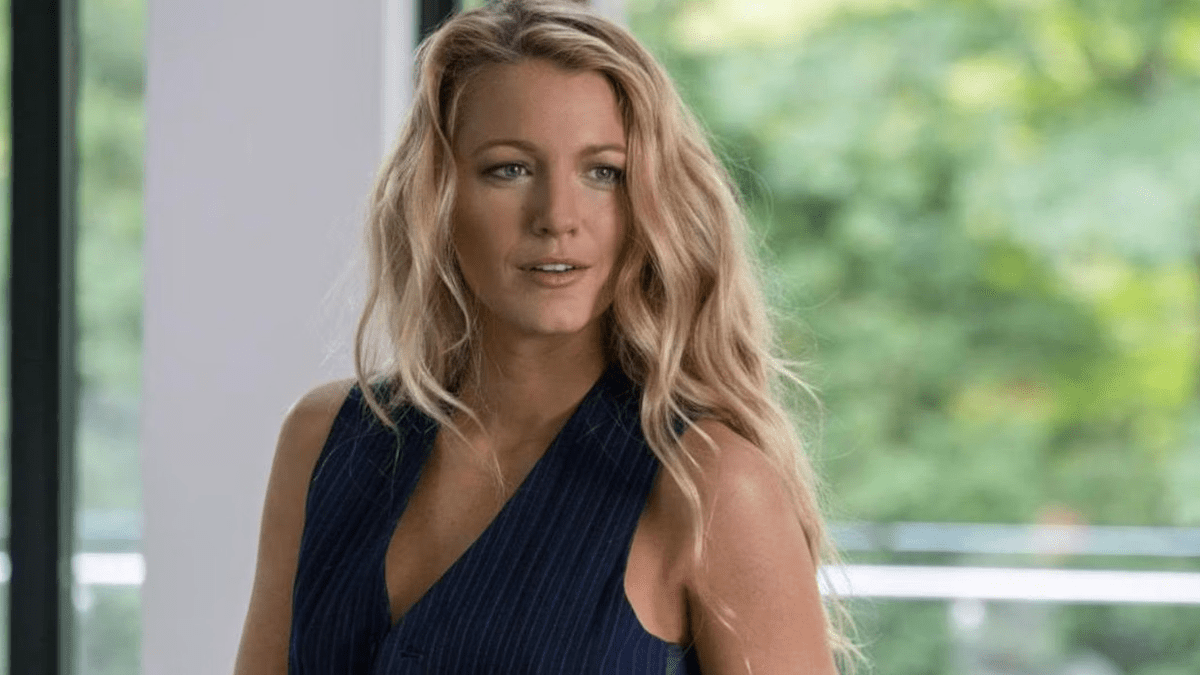
While watching It Ends With Us, I was reminded of the last romantic melodrama I’d seen, Where The Crawdads Sing. Although the heroines in both movies couldn’t have been more different, they both experienced a similar set of trials and tribulations. Given my admittedly small sample size, is it fair of me to assume that all romantic melodramas follow the same formula? And if so, is that part of the appeal with movies like It Ends With Us?
Adherence to the romantic melodrama formula is both the blessing and the curse for these movies. On the negative side, even casual viewers (like myself) find the stories to be extremely predictable. However, I believe that their appeal lies in their predictability with their target audience (of which I’m not a member). They don’t see a movie like It Ends With Us to have their expectations subverted. For example, nobody wants to see the poor Marsh Girl strapped into the electric chair. Instead, they appreciate a movie like It Ends With Us for how well it delivers the expected twists and turns.
It Ends With Us telegraphs what kind of movie it is from the opening scenes. Lily Bloom (Blake Lively) arrives in town for her father’s funeral. She’s beautiful and feisty, with a head of curly hair and a wardrobe of funky, oversized clothes that shout “I’m creative!”. Lily’s mother (Amy Morton) asked her to deliver a eulogy, but Lily hasn’t been able to come up with anything to say. Her mother advises her to simply write down five things she loved about her father, which should be easy enough to do. Lily’s father was the town’s mayor after all, so he must have had some good qualities. However, when the time comes, Lily approaches the podium with an empty list. Instead of lying, she walks out to a chorus of murmurs.
Before delving into Lily’s paternal issues, the story immediately presents her with a romantic prospect. While sitting on the rooftop of a hospital, Ryle (Justin Baldoni) bursts through the door and kicks a chair. (Given that Lily randomly chose the hospital, this must be fate, right?) When Ryle notices Lily, he calms down and asks her to come down from the ledge. She reassures him that she’s not going to jump, and he joins her.
One could hardly blame Lily for being immediately attracted to Ryle, given how handsome he is. With his perfect hair, perfect five o’clock shadow, perfectly chiseled abs, he looks like he was created at The Institute for Handsomeness. Perhaps this is why Lily offers to play a game she calls “Naked Truths”, where she reveals that she lost her virginity to a homeless boy. To his credit, Ryle says he can’t top that and doesn’t try. When he reveals that he’s a neurosurgeon, Lily laughs out loud because everybody knows that doctors are supposed to be pasty and pudgy. Evidently Dr. Hotness didn’t get that memo. Unfortunately, Ryle is called to an emergency surgery before any more sparks are generated between the two. Lily tells him goodbye but we know it won’t be for long.
Lily stays in town and decides to finally do what she’s been dreaming of since she was a child: opening a flower shop. A random stranger lets herself in and immediately ingratiates herself with Lily. She’s Allysa (Jelly Slate), and her wacky, unbridled nature makes her a perfect sidekick for Lily. One day, while the two of them get the shop ready to open, Allysa’s husband and her brother stop by. Yes, the mother of all coincidences happens when Ryle is revealed to be Allysa’s brother. (Boston is a very small world, indeed.) Both he and Lily admit that they really shouldn’t fall in love, given that their romance could negatively affect the business. Of course they fall for each other anyway, because the flower shop basically runs itself. (Later in the movie, Lily is absent from the shop for days on end while she works through her issues.)
Ryle and Lily eventually get married, which would be the happily ever after moment that everyone craves in the real world. Alas, marrying the man of your dreams never leads to happiness in movies like this. Cracks begin to appear in Ryle’s facade. We knew he had a temper from when he and Lily first met, but he tends to overreact when things don’t go his way. He gets angry over a burnt frittata. He’s peeved that the chef at a local restaurant is Lily’s childhood sweetheart (and former homeless person) Atlas (Brandon Sklenar). Suddenly, the passionate and confident doctor is revealed to be jealous and controlling. Where the movie goes from here is not a surprise. I found myself anticipating what happened next and feeling satisfied when I guessed correctly, with the exception of when/how Lily finally lowered the boom on Dr. Darkside.
Since It Ends With Us is really a story about the cycle of domestic abuse, it feels strange describing it as an exercise in wish-fulfillment. As an admitted outsider to this genre, I don’t want to offend any true believers but that was my main takeaway from the movie. Women want to identify with Lily Bloom, who is supernaturally beautiful. (That hair!) They also want to see her suffer through a bad relationship, just as they have in real life. But they also are rooting for her to come out on the other side in a better place. If I were to grade the movie only on how well it adheres to (what I believe are) typical romantic melodrama conventions, It Ends With Us would get high marks. However, a movie like this must also be judged by how well it colors within the lines of the genre’s conventions. In this regard, I would say that It Ends With Us land at the high-end of the scale.
It Ends With Us is well made, with evocative cinematography, beautiful sets and a soundtrack filled with songs that I wasn’t overly familiar with. The acting from the three leads (Lively, Baldoni and Sklenar) is solid, thankfully opting for realism over the theatricality that can turn material like this into a campy affair. As the star of the movie, Lively makes Lily a very sympathetic protagonist, a woman trying to make her dreams come true despite a traumatic childhood that haunts her. The movie does go a bit overboard in trying to make Lively relatable to everyday women by putting her in the frumpiest outfits imaginable. Lively is too innately glamorous to ever pass for a “frump girl”, however, a point emphatically made in one scene when she’s dressed up for a party.
The male leads, Baldoni and Sklenar acquit themselves well in roles that largely require them to stay within established parameters. Baldoni does more heavy lifting of the two, shifting from good guy to bad guy without making the transition too obvious. He almost manages to make his character sympathetic, which is something considering what transpires in the later half of the movie. I found it a tad unfair that the movie shrugs at his emotional baggage, but the movie doesn’t exist to tell his story. Sklenar’s performance, a combination of “the guy pining for the one who got away” and “the protector”, is a tricky one to pull off convincingly. Sklenar manages to achieve both by emphasizing his character’s underlying compassion over his lovelorn qualities, lending him a dignity that exceeds what the material required. Based on his work in this movie, Sklenar’s ability to portray tough-yet-sensitive guys should lead to more complex roles for him in the future.
As the director, Baldoni’s primary job is to frame himself and Lively in the best light, which he accomplishes throughout. However, Baldoni also shows a bit of directorial skill when the story allows. For example, Baldoni stages several key scenes so that the audience unknowingly witnesses the events from Lily’s perspective. Later, he revisits those scenes to show us how Lily has chosen to “not see” troubling things throughout her life. Baldoni’s simple approach to Lily’s mental sleight-of-hand effectively captures how easily we become unreliable narrators of our own lives. It Ends With Us is an engaging romantic melodrama that held my interest despite being predictable and formulaic. Solid performances throughout the cast, particularly from Blake Lively, elevate the material above the typical “Lifetime movie”. Recommended.
Analysis
How many women strong-armed their men into seeing this movie as an “it’s only fair” tradeoff for sitting through Deadpool & Wolverine?
Why didn’t Lily ever search for Atlas in the time since they last saw each other? Clearly she was inspired to open her shop in Boston because of how Atlas raved about the city. Why didn’t she simply look him up on social media like anyone else? Or him, for that matter, since he’s been pining for her ever since they were teenagers?
I would have loved to be a fly on the wall for the conversations at the luncheon after the service, where Mrs. Bloom likely would have been forced to answer countless questions about Lily’s stunt at the funeral.
Although the movie confirms that Lively is in great shape after having her fourth child, the focus is almost exclusively on perfectly coiffed hair. Lively’s face often looks like it is being gently supported by billowing ginger curls. If Lively ever does play a superhero, it should be Medusa, a member of the Inhumans with a massive head of hair that she controls with her mind.
Do Boston Bruins fans really put on onesies before heading to the local bar to watch the game? We (thankfully) don’t have that tradition in Detroit.
 Detroit Cineaste
One thought on “It Ends With Us”