Drop

Drop

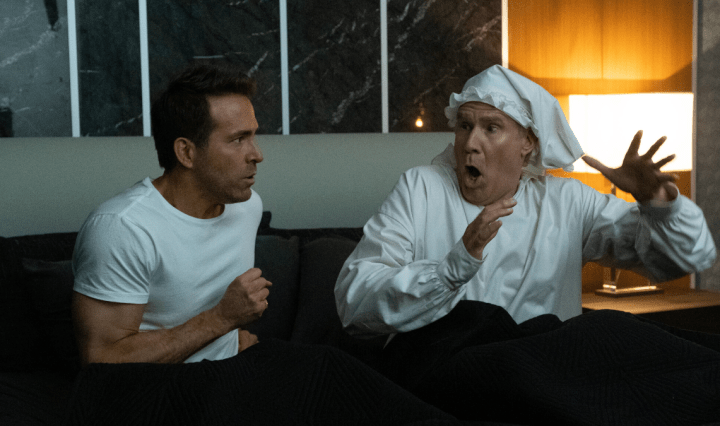
For a movie that recalls suspense thrillers of yesteryear, it’s fitting that Drop begins with an eye-catching opening title credit sequence.  In it, a series of items slowly rotate against a black background, with the breakable ones shattering.  This sequence, a pun on the movie’s title, also hints at what’s in store for us.  (There’s a reason for the inclusion of a spinning chess piece and dice.)  It’s a nice touch, but unfortunately what follows never tops it.

Continue reading “Drop”
A Working Man

A Working Man

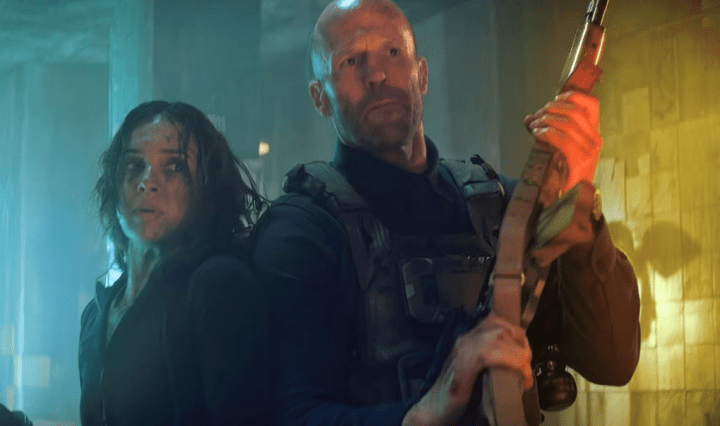
Jason Statham: Monster Hunter.  That’s what stuck in my mind as I watched Statham do his punch-kick-shoot-stab thing in A Working Man, an entertaining movie that often feels generic and routine.  Although there are no literal monsters in this movie, the movie’s gothic touches and freakish villains imply what could have been, if the filmmakers had the nerve to take the story in the direction they apparently wanted to go.  Seeing Statham hunting and killing evil Russians is fine, but swap out those ordinary targets to vampires and werewolves and we’d be talking next-level badassery.

Continue reading “A Working Man”
Presence

Presence

Presence is an atypical ghost story, in that it’s a first-person narrative told exclusively from the perspective of the ghost.  As such, the movie camera doubles as the ghost’s “eyes”, zooming around the suburban home setting like a hyperactive drone.  That’s because the camera actually is a drone, operated by Academy Award-winning director Stephen Soderbergh.

Continue reading “Presence”
Moana 2

Moana 2

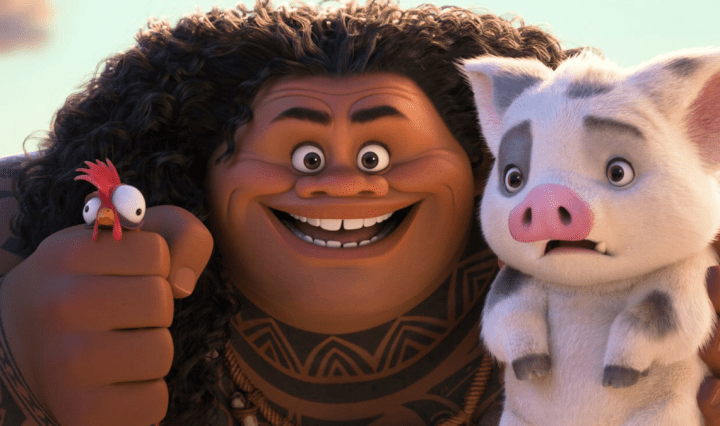
Moana has a restless spirit.  When we first met her in the eponymous movie from 2016, Moana was the only one on her island of Motunui who wasn’t happy with the status quo.  She didn’t want to just exist, she wanted to go places.  Simply put, she lives for adventure.  When she’s warned by her father not to venture beyond the reef, that’s exactly what she tries to do.  Moana fails, but that setback doesn’t stop her from trying again because she’s an explorer at heart, a feeling she conveys perfectly when she sings “How Far I’ll Go”.  (See the line where the sky meets the sea?  It calls me.)

Continue reading “Moana 2”
Gladiator 2

Gladiator 2

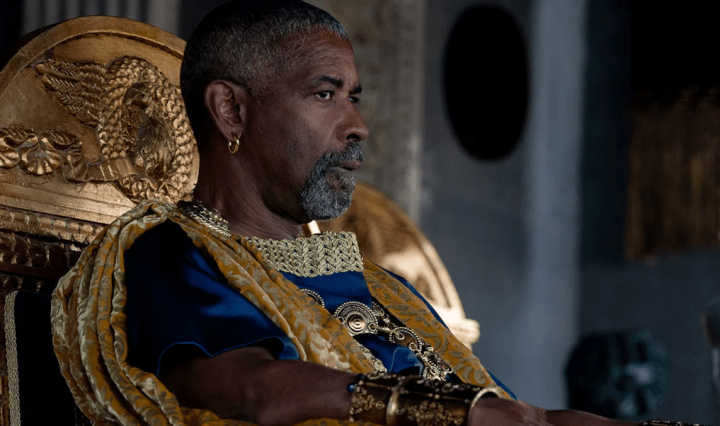
After twenty-four years, we finally have a sequel to Gladiator.  Why did it take so long to make a sequel to a film that was both a box office and critical success?  (The film won five Academy Awards, including Best Picture and Best Actor.)  There are several answers to that question, the first being that the writers were intent on bringing Russell Crowe’s Maximus back from the dead.  In case you may have forgotten, Maximus died shortly after killing the Emperor Commodus (Joakin Phoenix) in a fight to the death in the Colosseum.  Given that it’s extremely difficult to sell a sequel without the original’s main character, I can sympathize with why the writers stuck with the idea no matter how impossible it would have been to pull it off.  DreamWorks Pictures then went bankrupt in 2006, and Paramount Pictures put the project on hold indefinitely.  After eleven years, the story was reworked so that it no longer focused on Maximus, which was probably for the best because Crowe had since aged out of the part.  (See 2016’s The Nice Guys for evidence of how Crowe had “filled out” in the intervening years.)

Continue reading “Gladiator 2”
Ghost Story 1981

Ghost Story (1981)

If Hell hath no fury like a woman scorned, how bad would it be if that woman was a ghost?  According to Ghost Story, that would be very bad indeed for those responsible for her scorn.  In the movie, the ghost is Alma (Alice Krige), and she’s been giving a group of old men nightmares for years.  These men, who collectively go by the name of the Chowder Society, meet once a month to tell each other ghost stories.  The group includes Ricky (Fred Astaire), John (Melvyn Douglas), Edward (Douglas Fairbanks Jr.) and Sears (John Houseman).  How Alma and the Chowder Society are connected is the central mystery of the story, and I don’t want to give that away up front.  It involves an ill-fated summer romance when all parties were much younger, which led to an accident that became an unspeakable tragedy.  Despite their best efforts to put what happened behind them, the past has not stayed in the past.

Continue reading “Ghost Story (1981)”
Beetlejuice Beetlejuice

Beetlejuice Beetlejuice

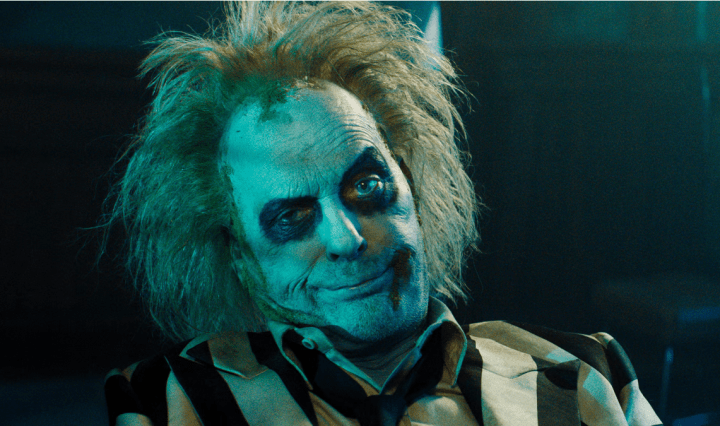
As I grow older, I sometimes wonder what the afterlife is like.  Will it follow the Catholic doctrine I was raised in, and be a celestial wonderland where everyone sings hymns and floats along on wings?  While that certainly sounds nice, I suspect I would get bored with it after a millennia or two.  Or maybe the afterlife will be like what Tim Burton envisioned in Beetlejuice, a world where the dead alternate between haunting the living and traveling to a janky bureaucracy.  Call me crazy, but the latter sounds like more fun.

Continue reading “Beetlejuice Beetlejuice”
Blink Twice

Blink Twice

One theory about crime that I’ve latched onto is how criminal activity is driven by the need to feel in control.  Generally speaking, criminals want to control the things they lack.  For example, a wealthy person controls money.  When a person of limited means steals it, they obtain control over the other person’s money.  (I’m grossly oversimplifying “Control Balance theory”, by the way.  Search on it if you’d like to know more.)  Similarly, a person can effectively control another person through a variety of criminal behaviors, principle among them being physical assault and murder.  The latter examples came to mind while I watched Blink Twice, where the desire to control another person, both mentally and physically, explains what we see, if only superficially.

Continue reading “Blink Twice”
Despicable Me 4 Mega Minions

Despicable Me 4

Has Gru always been a government agent?  I still haven’t seen Despicable Me 1, 2 or 3, so I’m at a disadvantage when it comes to grasping the nuances of this franchise.  I did see Minions: The Rise of Gru, where a grade school-aged Gru helped the Anti Villain League (or AVL) capture bad guys of his own free will.  Given how Despicable Me 4 shows that Gru is still in kahoots with “the man”, describing him as “despicable” is such a misnomer.  He may be irritable and occasionally get into mischief, but his heart is in the right place.  With that in mind, perhaps the time has come to give these movies a more appropriate name, like Disagreeable Me?  Or Dyspeptic MeCranky but Admirable Me?  If anyone at Illumination Studios is reading this, I offer up these suggestions free of charge.  Consider it a public service.

Continue reading “Despicable Me 4”