The Order

The Order

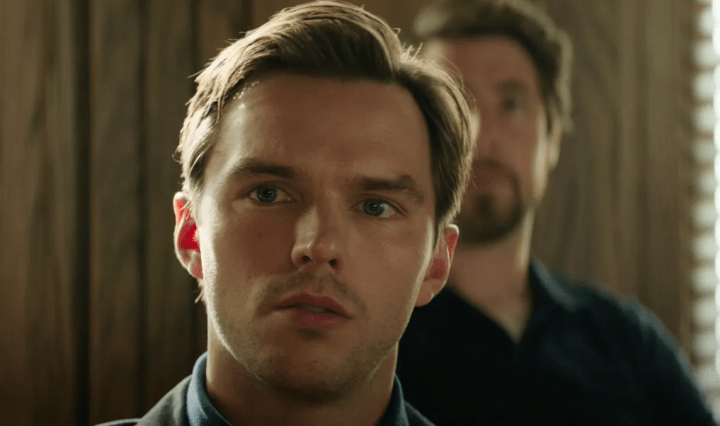
There’s nothing more dangerous than a man of principle.  That man will sacrifice everything to advance his cause, his friends, family, his health and even his own life.  His unshakeable belief in his own righteous cause justifies every decision, no matter the cost or who pays it.  The Order tells the story of two such men, one an FBI agent, the other the leader of a white separatist faction.  Despite their distinct differences in age, background and life experience, the movie reveals that they’re actually sides of the same coin.  Before the movie arrives at that conclusion, it establishes that these men are destined to collide in violent fashion.

Continue reading “The Order”
The Truth vs. Alex Jones

The Truth vs. Alex Jones

Structurally, The Truth vs. Alex Jones looks and sounds like a typical true crime documentary.  Somber cellos play over the opening credits.  Drones provide an aerial view of the town and the site where the crime took place.  Lawyers make confident and or defiant statements in front of microphones.  Photos and home movies of the victims accompany interviews with the grief-stricken surviving family members.  The shocking details of the crime echo in news media coverage.  Prosecuting attorneys and defendants have tense courtroom exchanges.  What distinguishes this documentary from the rest is that its focus isn’t the inciting incident–the mass shooting at Sandy Hook Elementary–but the criminal activity that began in the aftermath of that tragic event.

Continue reading “The Truth vs. Alex Jones”
Anora

Anora

According to writer-director Sean Baker’s Anora, working as a stripper is just another job, albeit an unusual one.  First there’s the disorienting atmosphere of the club, with its loud, thumping music and rotating colored lights.  Then there’s the job itself, which involves coaxing payments to pay for a few minutes of fake intimacy with a semi-nude woman.  Although it certainly helps to be a good erotic dancer, as Ani (Mikey Madison) is, it’s even more important to convince patrons that she likes them.  If they don’t believe her initial performance, they won’t pay for her services.  Being a successful stripper is about the art of pretending, convincing others that illusions are real and that dreams can come true–for a price.  It’s a theme that reverberates throughout the movie, reaching beyond its transactional origins to produce consequences both expected and unexpected.

Continue reading “Anora”
Juror #2

Juror #2

Juror #2 is a movie about difficult choices and how our moral compass tends to shift when our circumstances change.  What we believe in the abstract suddenly becomes untenable when the things we value are at risk.  The difficulties involved with making the right choice despite the consequences has been a reliable subject for drama films, including several of director Clint Eastwood’s best (Unforgiven, Mystic River, Million Dollar Baby, and American Sniper)It also happens to be the theme of Juror #2, which is what I imagine attracted Eastwood to the material.  The movie places the protagonist in an increasingly stressful situation and asks him to be an upstanding, law-abiding citizen.  However, doing so puts him directly at odds with being a good husband and father, which makes “the right choice” not so clear-cut.

Continue reading “Juror #2”
A Complete Unknown

A Complete Unknown

As a biopic, A Complete Unknown is obligated to show us its subject’s humble origins.  Accordingly, the movie opens with a twenty year-old Bob Dylan (Timothée Chalamet) in the back of a station wagon.  He’s hitching his way from New Jersey to Greenwich Village to see his folk music hero, Woody Guthrie.  Dylan works on a song during the ride, scratching out lyrics in a notebook while refining the melody on his guitar.  Dylan’s workmanlike qualities, specifically how he was always working on his music at all times, is a theme the movie returns to again and again.

Continue reading “A Complete Unknown”
Nosferatu 2024

Nosferatu

Instead of trying to find a new approach to the 127 year-old tale of Dracula, writer-director Robert Eggers has based his movie on director WF Murnau’s unauthorized adaptation from 1922, Nosferatu: A Symphony of Horror.  Murnau famously altered Stoker’s story in a failed attempt to circumvent copyright protections.  What he produced was a film that is both very  similar to Dracula and while diverging from it in very distinct ways.  In using Murnau’s film as his starting point, Eggers’ reimagining of the Dracula legend is the most compelling version of the vampire I’ve seen since Coppola’s Bran Stoker’s Dracula.

Continue reading “Nosferatu”
Flow

Flow

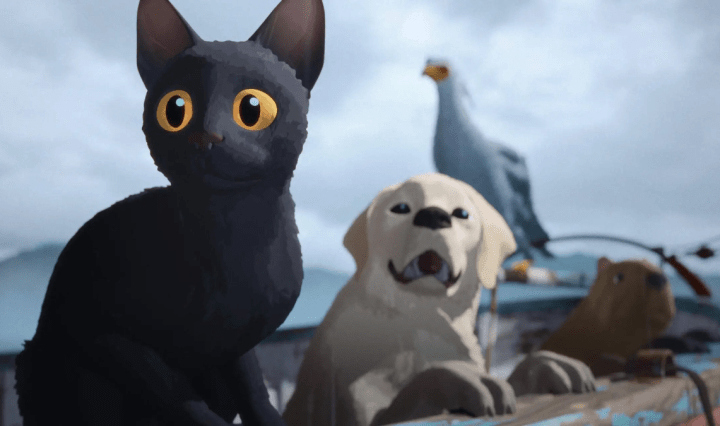
Although never explicitly stated, Flow is about climate change.  Even if you don’t believe in it, I think you can still enjoy the movie, but its underlying message will elude you.  There is a reason why an unassuming grey cat is forced to deal with a sudden environmental catastrophe, and it’s not so that we can see how well it can steer a boat.  (It steers surprisingly well, by the way.)

Continue reading “Flow”
Moana 2

Moana 2

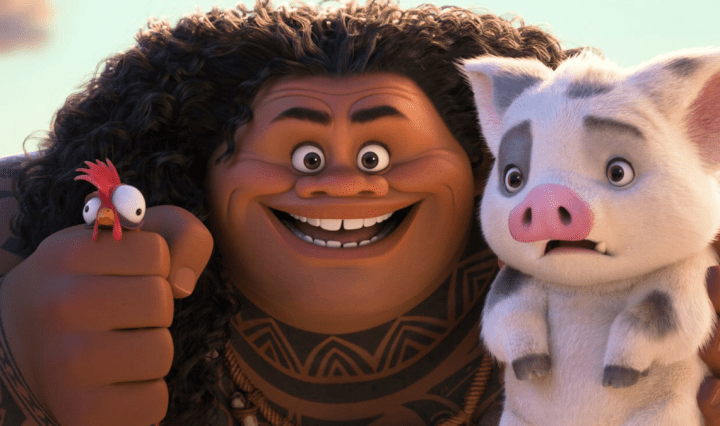
Moana has a restless spirit.  When we first met her in the eponymous movie from 2016, Moana was the only one on her island of Motunui who wasn’t happy with the status quo.  She didn’t want to just exist, she wanted to go places.  Simply put, she lives for adventure.  When she’s warned by her father not to venture beyond the reef, that’s exactly what she tries to do.  Moana fails, but that setback doesn’t stop her from trying again because she’s an explorer at heart, a feeling she conveys perfectly when she sings “How Far I’ll Go”.  (See the line where the sky meets the sea?  It calls me.)

Continue reading “Moana 2”
Gladiator 2

Gladiator 2

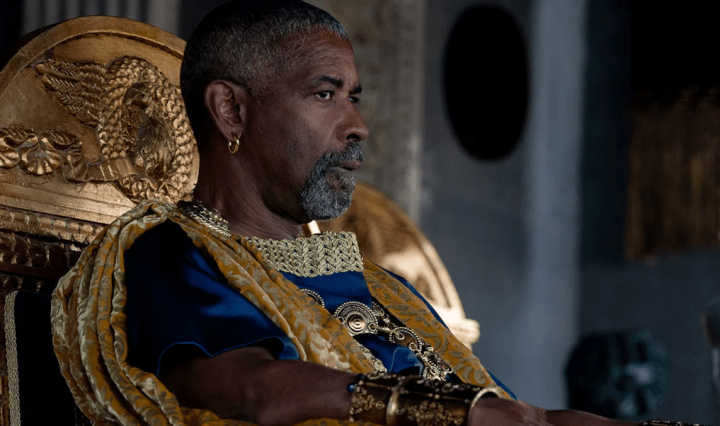
After twenty-four years, we finally have a sequel to Gladiator.  Why did it take so long to make a sequel to a film that was both a box office and critical success?  (The film won five Academy Awards, including Best Picture and Best Actor.)  There are several answers to that question, the first being that the writers were intent on bringing Russell Crowe’s Maximus back from the dead.  In case you may have forgotten, Maximus died shortly after killing the Emperor Commodus (Joakin Phoenix) in a fight to the death in the Colosseum.  Given that it’s extremely difficult to sell a sequel without the original’s main character, I can sympathize with why the writers stuck with the idea no matter how impossible it would have been to pull it off.  DreamWorks Pictures then went bankrupt in 2006, and Paramount Pictures put the project on hold indefinitely.  After eleven years, the story was reworked so that it no longer focused on Maximus, which was probably for the best because Crowe had since aged out of the part.  (See 2016’s The Nice Guys for evidence of how Crowe had “filled out” in the intervening years.)

Continue reading “Gladiator 2”