Cobweb

Cobweb

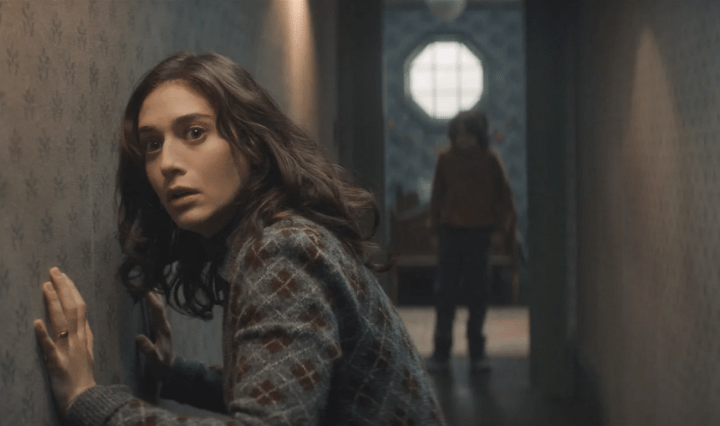
I enjoy horror movie cliches.  I wouldn’t be able to watch as many horror movies as I do if I didn’t.  For example, most horror movies have at least one scene where a door emits an agonizing squeak while opening slowly.  Just like the light that stops working at the worst possible moment, the creaky door moment is a staple of horror movies.  These cliches and horror movies go together like hands and gloves, bacon and eggs or Michael Myers and Halloween.  Even though I can sense when a creaky door is about to make an appearance, I always appreciate when a movie does them correctly.  The problem I had with Cobweb isn’t that it has at least a half-dozen creaky door scenes, but that none of them had any effect on me.  Even worse is that I had the same reaction to every other scary element in this movie:  none.

Continue reading “Cobweb”

The Marvelous Mrs. Maisel Season Five

The Marvelous Mrs. Maisel – Season Five

Season Five represents the final curtain call for The Marvelous Mrs. Maisel. After the previous four seasons detailed Midge’s trials and tribulations involved with becoming a famous stand-up comedian, she finds herself closer than ever before to realizing her dream. This doesn’t mean that success will come easily for Midge. She still proves to be her own worst enemy more than once, taking two steps back for every one step forward. Then there’s the ever-present sexism that permeates her line of work. In a male-dominated field, the men refuse to take Midge seriously. Her boss, Gordon Ford, hires her to balance out his all-male writer’s room but mainly wants to sleep with her. And when she auditions for Jack Paar’s show, the producer doesn’t get Midge. It’s enough to make a scrappy, no self-pity woman cry, which she does at one point.

Continue reading “The Marvelous Mrs. Maisel – Season Five”
Killers of the Flower Moon

Killers of the Flower Moon

Having not read the book that Killers of the Flower Moon is based on, I can’t say conclusively that the movie would have worked better if it had also told the story from the Federal Agent’s perspective. I suspect that it would have, because all criminal investigations have a natural propulsive quality to them that pull you in. True crime stories are addictive because viewers want to experience the thrill of the investigation and hopefully see justice served in the end. The problem Scorsese and co-writer Eric Roth reportedly had with using that structure is that it would have relegated the Osage to the periphery and placed white men as the central figures of the story (as both villains and heroes). However, in placing Mollie and the Osage at the center of the events, the story loses nearly all of its dramatic tension as a result. The movie explains who the bad guys are, what they are doing and why from very early on, and the story unfolds from there without any real surprises to it. The audience is asked to witness each killing (or mysterious death) until the federal agents eventually arrive to put a stop to things at the two hour mark.

Continue reading “Killers of the Flower Moon”
Anatomy of a Fall

Anatomy of a Fall

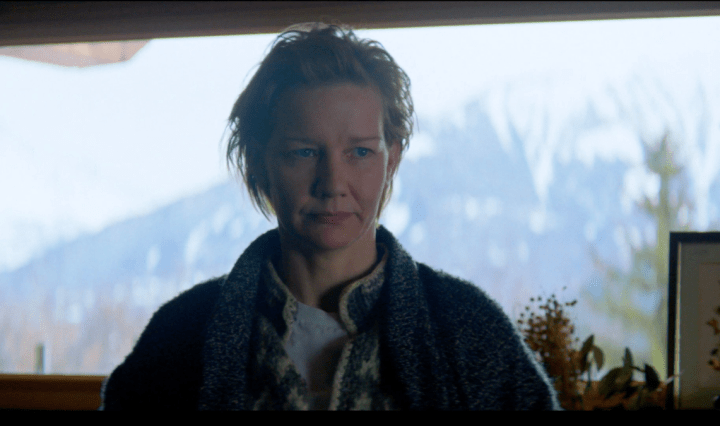
Anatomy of a Fall looks and sounds like a standard courtroom drama.  It opens with a startling scene, where a young boy named Daniel (Milo Machado-Graner) returns from a walk with his dog to find his father dead on the snowy ground outside the chalet where his family lives.  Daniels’ mother Sandra (Sandra Hüller) rushes outside and calls for an ambulance.  When the police arrive, she explains that she was asleep when Samuel (Samuel Theis) jumped to his death.  The police, however, don’t buy her story.  After analyzing the crime scene and digging into Samuel’s past, they conclude that Sandra pushed her husband to his death.  Charges are filed against her, and the resulting trial includes the requisite scenes of prosecutor/witness pyrotechnics.  On this level, the story would serve as a gripping episode of Law & Order: The French Alps.

Continue reading “Anatomy of a Fall”
American Fiction

American Fiction

American Fiction belongs to a genre of films that I always appreciate, the portrait of the frustrated artist.  This genre includes artists who work in various mediums (painters, sculpture, etc.), musicians, actors and of course writers.  American Fiction is about a writer named Thelonious “Monk” Ellison (Jeffrey Wright), and the reasons why he is frustrated with his career are made evident within the opening minutes of the movie.  Monk’s latest book has been rejected nine times, so he’s forced to teach to earn a living.  He hates the job because he doesn’t suffer fools lightly.  Monk believes he’s the smartest person in whatever room he walks into, and even though he’s usually right, nobody wants to have it rubbed in their faces.  He brandishes his intelligence like a sidearm and is willing to duel with anyone who dares disagree with him about anything.  When a white student says she’s offended by the n-word, he bluntly tells her that if he can get over it, so can she.  When an antagonistic colleague critiques his output and lack of publishing success, Monk retorts that quality takes time and that being purchased by travelers when they buy their neck pillows and Cheese-Its is not an achievement.  Monk’s insistence of his intellectual superiority over others dates back to his childhood, when his siblings gave him the nickname “Detective Dictionary”.

Continue reading “American Fiction”
Past Lives

Past Lives

Everyone knows a couple who are so perfect for each other that you can’t imagine them apart.  We think of them as soulmates, two people who were destined to be together.  The notion that there is someone out there who is only meant for you is an incredibly romantic one.  You hope that you’ll find that special someone one day, and consider yourself fortunate when you do.  Sometimes, finding your soulmate is incredibly easy.  Past Lives tells the story of Na Young (Moon Seung-ah, Greta Lee) and Hae Sung (Leem Seung-min, Teo Yoo) who, beginning when they were twelve-years old, are obviously meant for each other.  They’re inseparable at school, laughing at their private jokes.  Na’s outgoing and friendly personality and Hae’s quiet and sensitive nature compliment each other perfectly.  When their mothers arrange a playdate, they are immediately convinced that Na and Mae will be married one day.  Unfortunately, fate intervenes when Na’s parents decide to emigrate to Toronto.  This is devastating news for Hae, who is the hopeless romantic between the two of them.  Na is also sad at leaving Hae behind, but she embraces this big change in her life.  She wants to become a writer and tells her classmates that Korea has never produced a writer who won the Nobel prize for literature.

Continue reading “Past Lives”
Maestro Carey Mulligan

Maestro

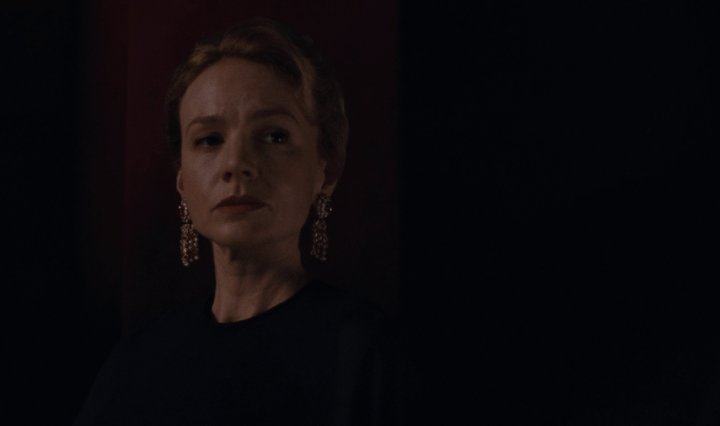
Maestro covers roughly forty years of Leonard Bernstein (Bradley Cooper), from his big break in his twenties to when he’s an older man in his sixties ruminating on his failure as a husband to his wife Felicia (Carey Mulligan).  As the director and writer of this film, Cooper shows the two falling in love, getting married, having a family, and how Bernstein’s wandering eye and sexual appetite tested their union.  Along the way Bernstein did many things that established him as a world-renowned conductor and composer.  The movie isn’t interested in exploring either his creativity or his art, and instead focuses on his relationship with Felicia.  She plays the  long-suffering wife to her husband, the genius.  Beyond the obvious marital strife, the story Cooper tells is not compelling because it is largely devoid of conflict.  When he’s not being a genius, Bernstein treats his wife with little regard for her feelings.  He does answer the call when he needs to, and the movie ends with tinges of regret, but the overall impact of this true life story felt muted.

Continue reading “Maestro”
The Beekeeper

The Beekeeper

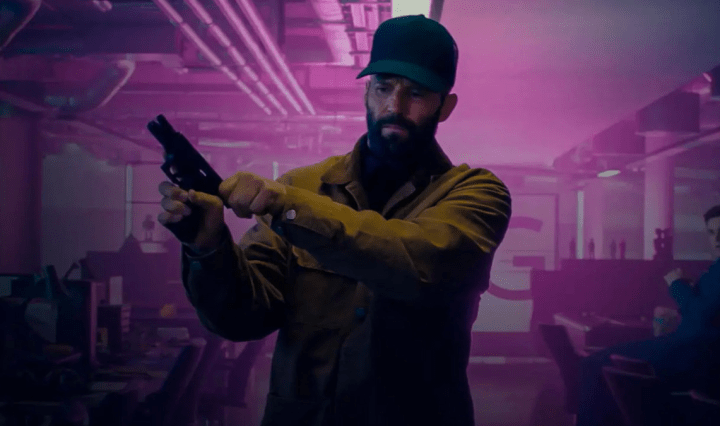
In The Beekeeper, Jason Statham plays Adam Clay, a literal beekeeper who works on the country estate of Phylicia Rashad’s Eloise.  How Rashad wound up in a Statham kick-punch vehicle I’ll never understand, but she’s a nice presence for as long as she’s around.  One day, Eloise gets a “Your computer is infected with a virus and you must call this number to clear it up” prompt on her laptop.  Like most senior citizens, she doesn’t know it’s a scam and calls the number.  The office she reaches has people wearing headsets and looks like a repurposed strip club, a telltale sign that the operation is not on the up-and-up.  The MO of this techno boiler room is to trick the person on the other end of the line to hand over their login credentials for their savings accounts.  For a movie that leaves reality behind fairly quickly, I have to acknowledge the filmmakers for using a relatable crime as the genesis for this story, and not the usual mobsters and drugs angle.

Continue reading “The Beekeeper”
May December

May December (Netflix)

May December is not merely clever, it’s diabolical.  That’s the best way I can describe a movie that adopts a persona to hide its true intentions–while telling a story about characters who do the exact same thing.  On the surface, Elizabeth (Natalie Portman) is a professional actress who wants to learn everything she can about Gracie (Julianne Moore), the basis of her next role in an independent movie.  Like the real life case involving Mary Kay Letourneau, Gracie seduced Joe (Charlie Melton) when he was in grade school.  Elizabeth says she wants to give a true performance of Gracie and does what actors normally do to prepare for their next role.  She interviews the people involved, scouts locations and scours the media coverage of the incident.   However, it soon becomes evident that Elizabeth’s intentions aren’t as noble as she says they are.  Additionally, understanding Gracie and Joe is difficult, given how they’ve learned to shield themselves with their own performances for the past twenty years.

Continue reading “May December (Netflix)”