Nosferatu 2024

Nosferatu

Instead of trying to find a new approach to the 127 year-old tale of Dracula, writer-director Robert Eggers has based his movie on director WF Murnau’s unauthorized adaptation from 1922, Nosferatu: A Symphony of Horror.  Murnau famously altered Stoker’s story in a failed attempt to circumvent copyright protections.  What he produced was a film that is both very  similar to Dracula and while diverging from it in very distinct ways.  In using Murnau’s film as his starting point, Eggers’ reimagining of the Dracula legend is the most compelling version of the vampire I’ve seen since Coppola’s Bran Stoker’s Dracula.

Continue reading “Nosferatu”
Flow

Flow

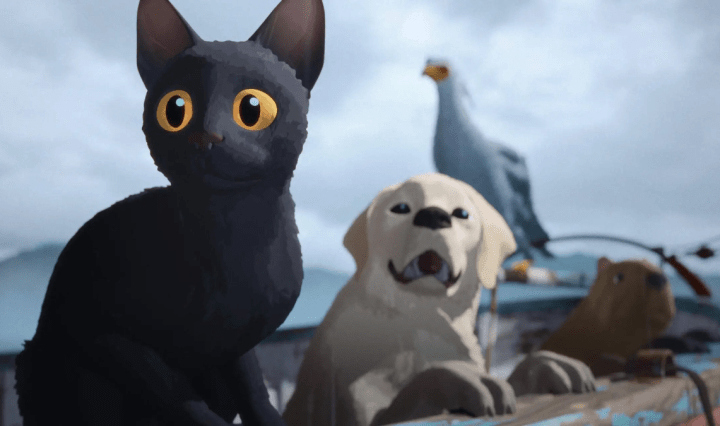
Although never explicitly stated, Flow is about climate change.  Even if you don’t believe in it, I think you can still enjoy the movie, but its underlying message will elude you.  There is a reason why an unassuming grey cat is forced to deal with a sudden environmental catastrophe, and it’s not so that we can see how well it can steer a boat.  (It steers surprisingly well, by the way.)

Continue reading “Flow”
Moana 2

Moana 2

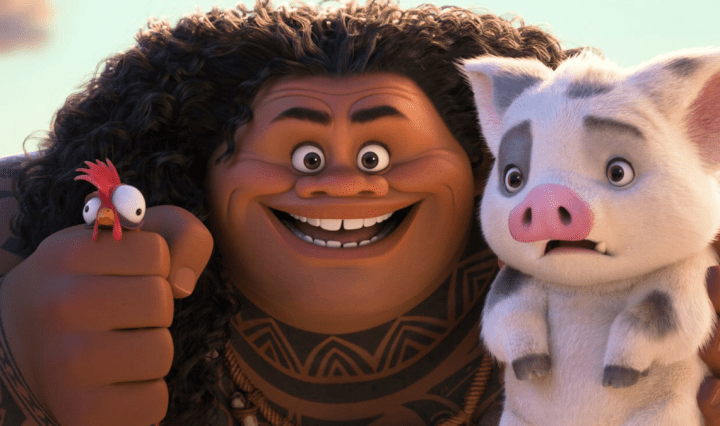
Moana has a restless spirit.  When we first met her in the eponymous movie from 2016, Moana was the only one on her island of Motunui who wasn’t happy with the status quo.  She didn’t want to just exist, she wanted to go places.  Simply put, she lives for adventure.  When she’s warned by her father not to venture beyond the reef, that’s exactly what she tries to do.  Moana fails, but that setback doesn’t stop her from trying again because she’s an explorer at heart, a feeling she conveys perfectly when she sings “How Far I’ll Go”.  (See the line where the sky meets the sea?  It calls me.)

Continue reading “Moana 2”
The Blair Witch Project 1999

The Blair Witch Project (1999)

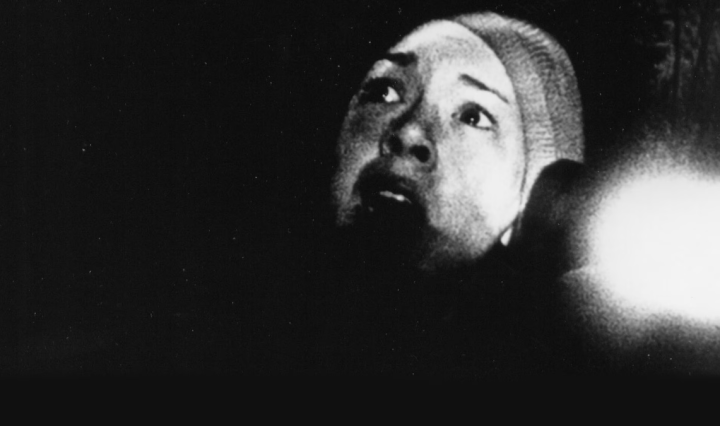
Recently, someone posted a topic on Reddit titled “What is everybody’s opinion on “The Blair Witch Project”? Is it a modern-day horror classic? Is it overrated? Is it in between? How does it hold up today?”  While I did see the movie in a theater when it was first released, I can’t remember watching it since.  Given the twenty-five year time lapse, I didn’t trust that my memory of the movie would be accurate and I declined chiming in.  However, reading the comments did bring back memories of the considerable buzz the movie had in summer of 1999.

Continue reading “The Blair Witch Project (1999)”
Gladiator 2

Gladiator 2

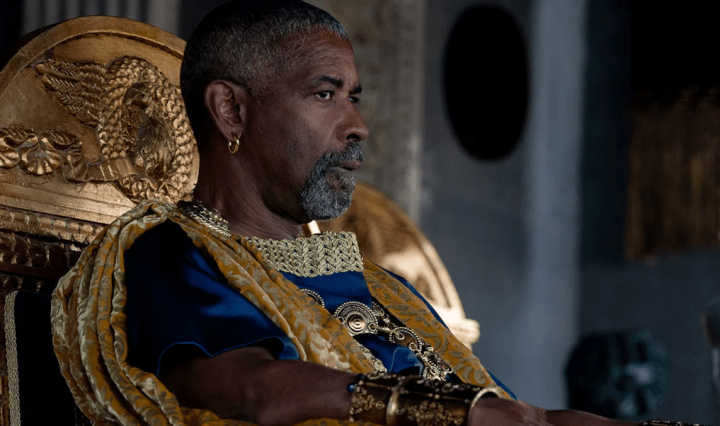
After twenty-four years, we finally have a sequel to Gladiator.  Why did it take so long to make a sequel to a film that was both a box office and critical success?  (The film won five Academy Awards, including Best Picture and Best Actor.)  There are several answers to that question, the first being that the writers were intent on bringing Russell Crowe’s Maximus back from the dead.  In case you may have forgotten, Maximus died shortly after killing the Emperor Commodus (Joakin Phoenix) in a fight to the death in the Colosseum.  Given that it’s extremely difficult to sell a sequel without the original’s main character, I can sympathize with why the writers stuck with the idea no matter how impossible it would have been to pull it off.  DreamWorks Pictures then went bankrupt in 2006, and Paramount Pictures put the project on hold indefinitely.  After eleven years, the story was reworked so that it no longer focused on Maximus, which was probably for the best because Crowe had since aged out of the part.  (See 2016’s The Nice Guys for evidence of how Crowe had “filled out” in the intervening years.)

Continue reading “Gladiator 2”
Heretic Hugh Grant

Heretic

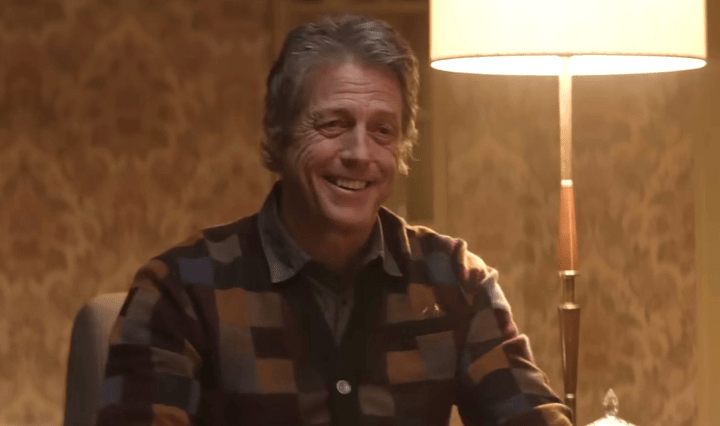
This will sound odd, but if I were in charge of The Church of Latter Day Saints, I would promote the heck out of Heretic.  Why?  Because it’s a story that depicts Mormons as being a grade above the nerds of organized religion they’re typically made out to be.  After the thorough skewering the religion received at the hands of The Book of Mormon, any positive depiction of it should be welcomed by church elders with open arms.

Continue reading “Heretic”
Conclave

Conclave (review)

Contrary to what you may read elsewhere, Conclave is not an Agatha Christie style murder mystery.  First, there are no murders within the story.  The Pope who if found deceased at the outset died from natural causes.  Apparently, he kept his health status close to the vest, for reasons that become clear through the actions of those in his inner circle following his death.  Additionally, none of the other players–cardinals, nuns and monsignors–wind up dead either.  Second, while there is mystery surrounding one key character, the plot is not dependent upon its resolution.  While the revelation of this person’s secret comes as a complete surprise, it doesn’t affect the actual outcome of this incredible and thoroughly engrossing story.

Continue reading “Conclave (review)”
Conclave

Conclave (analysis)

The genius of Conclave is in how it disguises the mystery at its core until the very end.  In the interim, the movie presents a series of ancillary mysteries that, as they are addressed, combine like puzzle pieces to reveal what the story was actually about.  Only then do we understand that the story was about how the pope did everything he could to ensure that the right man succeeded him.  In other words, the pope works in mysterious ways.

Continue reading “Conclave (analysis)”