The Rule of Jenny Pen

The Rule of Jenny Pen

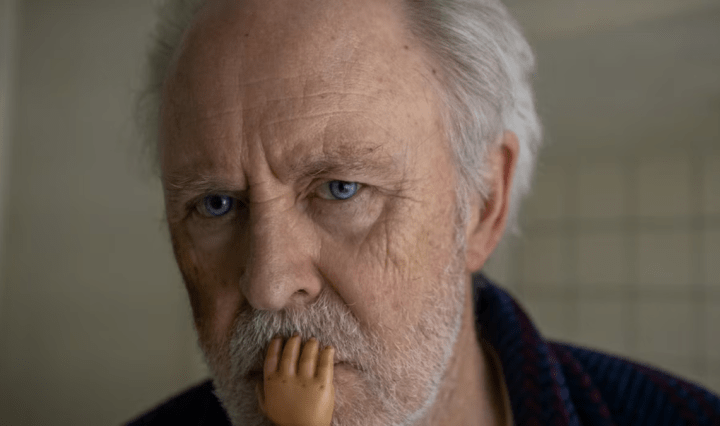
Everyone has met someone so full of themselves that you wish you could be there for their comeuppance and subsequent humbling.  Since this rarely happens in real life, movies like The Rule of Jenny Pen oblige us in this type of wish fulfillment.  In it, Judge Stefan Mortensen (Geoffrey Rush)  is exactly the kind of arrogant bastard who we can’t wait to see laid low by fate.  But, as the saying goes, even the wicked get worse than they deserve.

Continue reading “The Rule of Jenny Pen”
The Truth vs. Alex Jones

The Truth vs. Alex Jones

Structurally, The Truth vs. Alex Jones looks and sounds like a typical true crime documentary.  Somber cellos play over the opening credits.  Drones provide an aerial view of the town and the site where the crime took place.  Lawyers make confident and or defiant statements in front of microphones.  Photos and home movies of the victims accompany interviews with the grief-stricken surviving family members.  The shocking details of the crime echo in news media coverage.  Prosecuting attorneys and defendants have tense courtroom exchanges.  What distinguishes this documentary from the rest is that its focus isn’t the inciting incident–the mass shooting at Sandy Hook Elementary–but the criminal activity that began in the aftermath of that tragic event.

Continue reading “The Truth vs. Alex Jones”
Heart Eyes

Heart Eyes

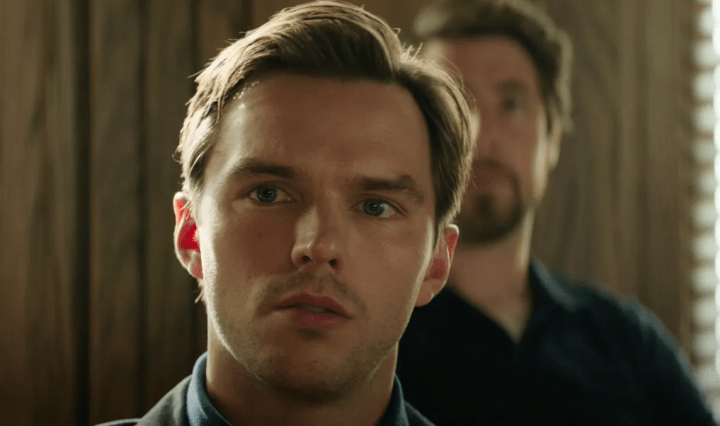
Based on how Heart Eyes begins, I assumed the masked killer known as “Heart Eyes” (or HE, for short) hated Valentine’s Day and was taking his anger out on anyone celebrating the holiday.  The people HE initially dispatches–an annoying couple and their engagement photographer–indicate as such.  Subsequent victims, all engaged in conspicuously lovey-dovey behavior before they were sliced and diced, also appear to prove my hypothesis.  However, as we follow the ill-timed courtship of the two lovebirds at the center of this story, I realized that the movie isn’t about homicidal anger, but love.  Serial killers just have a funny way of showing it.

Continue reading “Heart Eyes”
Captain America Brave New World

Captain America: Brave New World

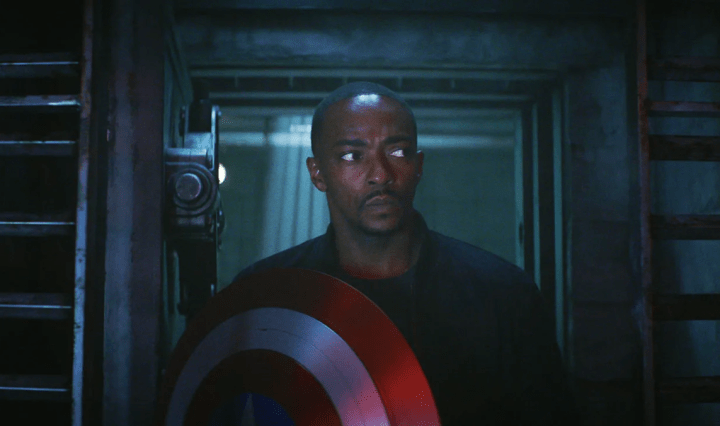
From what we see at the outset of Captain America: Brave New World, Sam Wilson (Anthony Mackie) has made great strides since he accepted being Captain America four years ago.  His contacts in Wakanda have outfitted him with Vibranium wings, which emit a purple energy blast when he slams them on the ground.  He’s also become proficient wielding his shield, so much so that the speed and complexity of the ricochets boggle the mind.  I wished the movie had included one of those training montages that were mandatory in all superhero movies.  I really would have appreciated seeing how Sam learned how to fling it so that it caroms off of walls, people and everything in between until it circles back like a gleaming frisbee.  Where did he train?  How did he become so adept at playing the angles?  Did he start out by mastering billiards, or perhaps bowling?  Did an elderly Steve Rogers train Sam à la Mr Miagi just before he checked out permanently?  (No, Chris Evans is not in this movie.)

Continue reading “Captain America: Brave New World”
Anora

Anora

According to writer-director Sean Baker’s Anora, working as a stripper is just another job, albeit an unusual one.  First there’s the disorienting atmosphere of the club, with its loud, thumping music and rotating colored lights.  Then there’s the job itself, which involves coaxing payments to pay for a few minutes of fake intimacy with a semi-nude woman.  Although it certainly helps to be a good erotic dancer, as Ani (Mikey Madison) is, it’s even more important to convince patrons that she likes them.  If they don’t believe her initial performance, they won’t pay for her services.  Being a successful stripper is about the art of pretending, convincing others that illusions are real and that dreams can come true–for a price.  It’s a theme that reverberates throughout the movie, reaching beyond its transactional origins to produce consequences both expected and unexpected.

Continue reading “Anora”
Companion

Companion

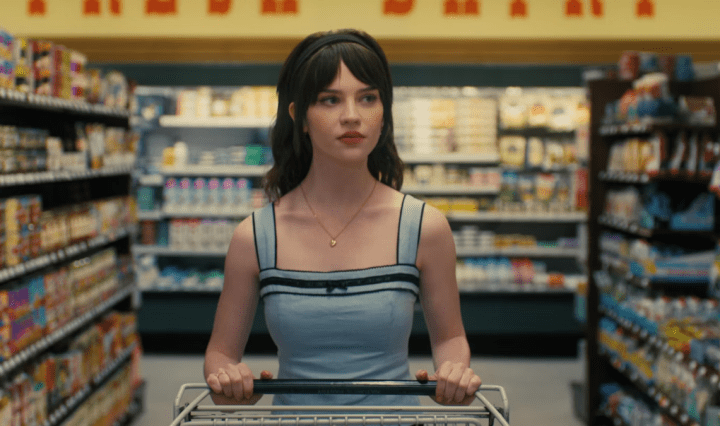
Science fiction often tells us that robots want to be human.  The twist in Companion is that Iris (Sophie Thatcher), the robot at the center of this story, believed she was human right until her owner threatened to shut her off.  In an instant, she not only learns that she’s not alive, but that her boyfriend is a total creep.  Considering how humans behave towards her throughout the movie, it makes perfect sense that she embraces her robot existence in the end.  It certainly beats the vastly inferior alternative.

Continue reading “Companion”
Presence

Presence

Presence is an atypical ghost story, in that it’s a first-person narrative told exclusively from the perspective of the ghost.  As such, the movie camera doubles as the ghost’s “eyes”, zooming around the suburban home setting like a hyperactive drone.  That’s because the camera actually is a drone, operated by Academy Award-winning director Stephen Soderbergh.

Continue reading “Presence”
The Straight Story

The Straight Story

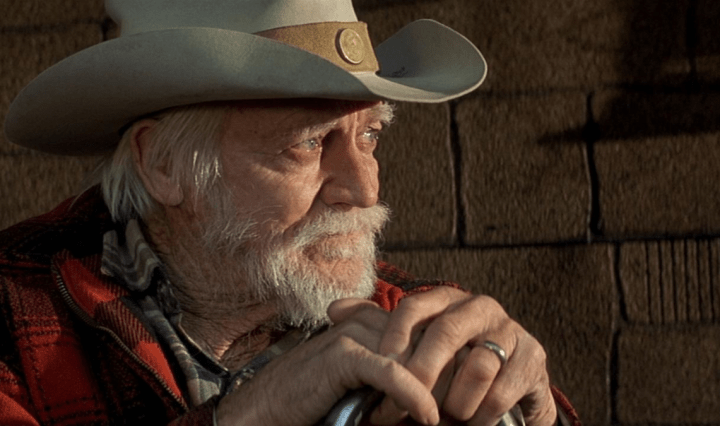
In what may be cinema’s most perplexing title card sequence ever, The Straight Story begins with “Walt Disney Pictures Presents…A Film By David Lynch”.  No, this isn’t a joke on Lynch’s behalf.  This movie really was released by Disney in 1999.  It was also Lynch’s only “G” rated film, which makes the odd juxtaposition easier to comprehend.  If you’re a Lynch devotee like myself, I want to assure you that although the movie is for general audiences, it does includes many of Lynch’s signature artistic touches that his fans will recognize immediately.  In other words, The Straight Story is just as  “Lynchian” as Blue Velvet or Mulholland Drive, two of his most highly regarded films.

Continue reading “The Straight Story”
Juror #2

Juror #2

Juror #2 is a movie about difficult choices and how our moral compass tends to shift when our circumstances change.  What we believe in the abstract suddenly becomes untenable when the things we value are at risk.  The difficulties involved with making the right choice despite the consequences has been a reliable subject for drama films, including several of director Clint Eastwood’s best (Unforgiven, Mystic River, Million Dollar Baby, and American Sniper)It also happens to be the theme of Juror #2, which is what I imagine attracted Eastwood to the material.  The movie places the protagonist in an increasingly stressful situation and asks him to be an upstanding, law-abiding citizen.  However, doing so puts him directly at odds with being a good husband and father, which makes “the right choice” not so clear-cut.

Continue reading “Juror #2”
A Complete Unknown

A Complete Unknown

As a biopic, A Complete Unknown is obligated to show us its subject’s humble origins.  Accordingly, the movie opens with a twenty year-old Bob Dylan (Timothée Chalamet) in the back of a station wagon.  He’s hitching his way from New Jersey to Greenwich Village to see his folk music hero, Woody Guthrie.  Dylan works on a song during the ride, scratching out lyrics in a notebook while refining the melody on his guitar.  Dylan’s workmanlike qualities, specifically how he was always working on his music at all times, is a theme the movie returns to again and again.

Continue reading “A Complete Unknown”